Showing posts with label racing. Show all posts

Tuesday, 31 May 2016

Keiichi Tsuchiya


Keiichi Tsuchiya

Keiichi Tsuchiya ( born January 30, 1956) is a professional race car driver. He is also known as the Drift King(Dorikin) for his nontraditional use of drifting in non-drifting racing events and his role in popularizing drifting as a motorsport. He is also known for touge (mountain pass) driving.

The car he drives, a Toyota AE86 Sprinter Trueno, has become one of the most popular sports cars; the car is also known as "Hachi-Roku" in Japan (hachi-roku meaning "eight six"); his car is also called "The Little Hachi that could." A video known as Pluspy documents Tsuchiya's touge driving with his AE86. He also is a consultant for one of the popular comic books and manga, Initial D, of which the main characterTakumi Fujiwara is a character which describes him.

Tsuchiya started his career through the Fuji Freshman series in 1977. Unlike many drivers who came from wealthy families or motorsport backgrounds, he honed his skills from street racingand became an underground legend.
Racing career National championships .

He would continue to take part in the Japanese Formula Three Championship, Japanese Touring Car Championship (JTCC), the latter while driving a Nissan Skyline GT-R (previously in the Cosmo Oil Sierra Cosworth) in the Group A championships and later a Honda Civic in the Supertouring car championships. Le Mans 

He went on to score a class win and an 8th place overall at the 1995 24 Hours of Le Mans in a Honda NSX. In 1999 of the same race, this time in a Toyota GT-One, during the last hour while co-driver Ukyo Katayama was building up pace to the leading BMW V12 LMR he was forced into the grass by a backmarker privateer's BMW LMP, blowing the tire out. They survived the ordeal and went onto score the fastest lap but were forced to settle for second. NASCAR 

He has raced in NASCAR-sanctioned exhibition races at Suzuka Circuit (Suzuka Thunder 100) and at Twin Ring Motegi Superspeedway for the 1998 NASCAR-sanctioned exhibition and 1999 NASCAR Grand National Division, AutoZone West Series races at the circuit, both named the Coca-Cola 500K.
Drifting career

When Tsuchiya was a freshman in circuit racing, he got his racing license suspended because of the illegal racing he was still doing (cause of the Drift Pluspy video). In the movie seriesShuto Kousoku Trial, he advised street racers to leave the illegal racing scene if they want to become involved with professional racing.
After his retirement

After his retirement, he remained in racing and is now an official Drift Muscle judge after quitting D1 in January 2011 and was Team Director for both GT500 for one year and GT300 Class ofARTA JGTC Team until the team disbanded their GT300 operation at the end of the 2005 season. He owned the aftermarket company Kei Office until he sold the business in mid-2005 to form DG-5. His trademark color is jade green which appears on his overalls and helmet and is the adopted color of the former company. It was also the colour of the D1 Grand Prix Kei Office and DG-5 S15 Silvia of driver and employee Yasuyuki Kazama who also wears a suit similar in pattern.

He also hosts the video magazine "Best Motoring" which features road tests of new Japanese cars including a special section called "Hot Version" which focuses on performance-modified cars. He is a guest presenter in Video Option, a monthly video magazine, similar to Hot Version except regularly covers the D1GP and its sister video magazine Drift Tengoku which deals purely with drifting.

He has been an editorial supervisor on the televised anime Initial D and Wangan Midnight. He appeared in episode 23 of Initial D First Stage as a special guest. He also appeared in the semi biographical film Shuto Kousoku Trial 2, 3, 4, 5, and 6 was also featured in the Super GT magazine show in Japan. His life in driving is parallel to that of the Initial D main character, Takumi, as both of them started exploring their local touge while doing regular deliveries for their family businesses. In the Initial D 3rd Stage, the color can also be seen on the overalls and helmet of the sportsbike rider who overtook Takumi as he was en route to an initiation battle with Ryosuke Takahashi. The color of Tomo's racing suit from the Initial D 4th Stage is jade green and has a similar pattern to Tsuchiya's suit. He also made an appearance opposite Top Gear's Jeremy Clarkson in a Motorworld in Japan special showing drifting competition in the late 1980s in Japan.

After 1995, he sometimes appeared as a Formula One guest commentator in Japanese Fuji TV.
In 2006, he made a cameo as a fisherman in the movie The Fast and the Furious: Tokyo Drift in which he served as a stunt coordinator and stunt man.
In 2014, he announced a joint venture with King of Europe ProSeries in order to create King of Asia ProSeries.


THE MAZDA LEGEND FOREVER


True Mazda Legend...


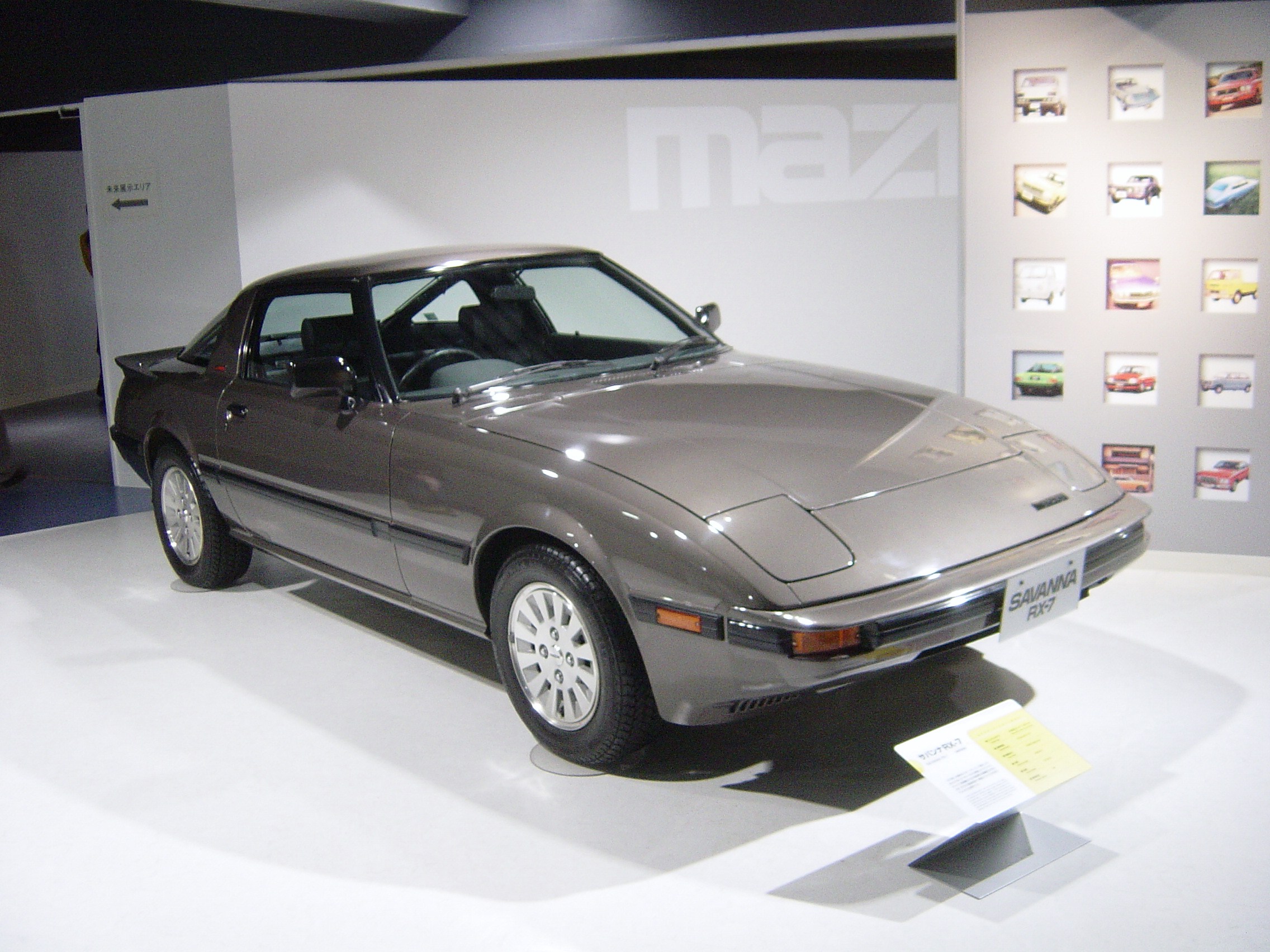
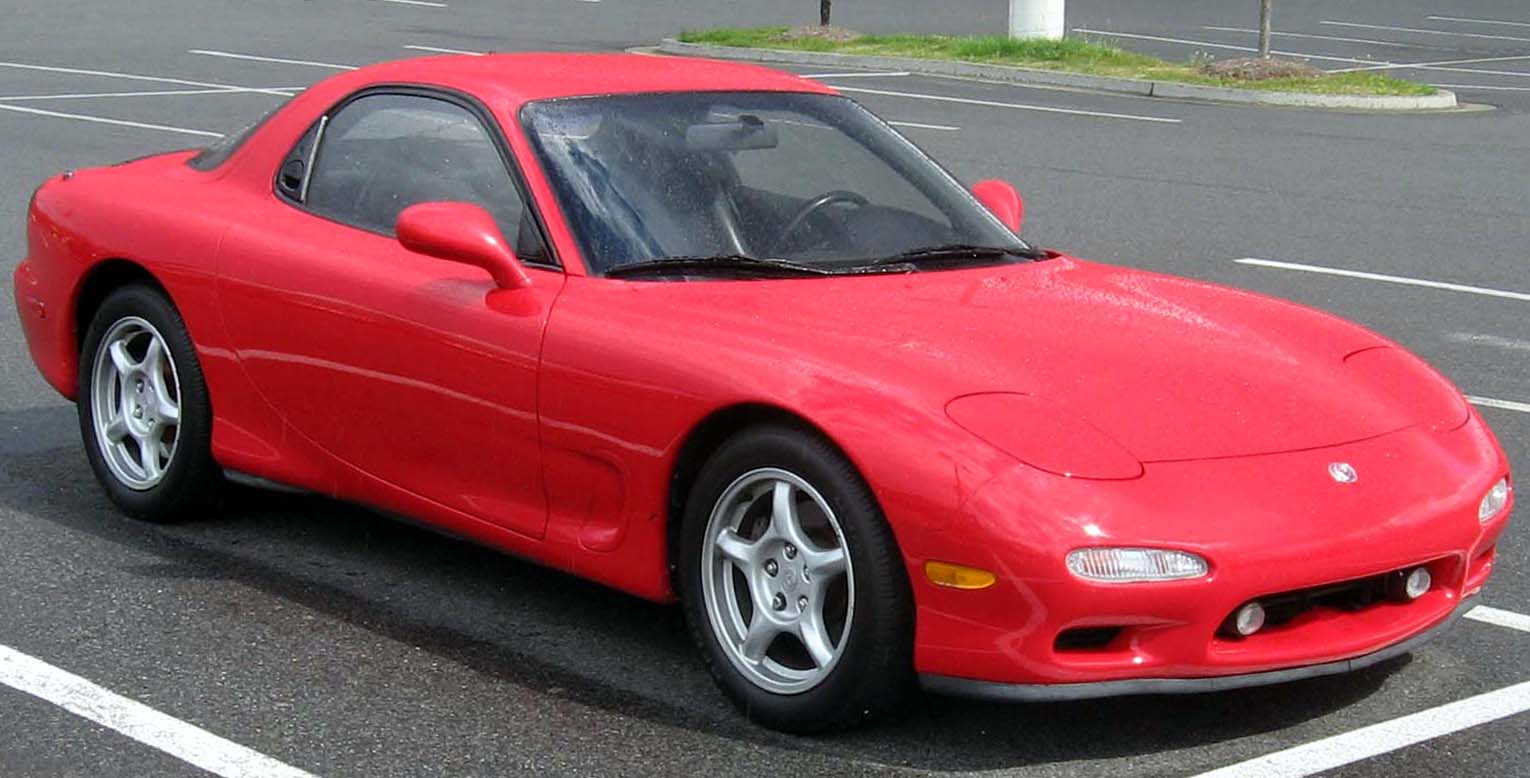
The Mazda RX-7 is a sports car that was produced by the Japanese automaker Mazda from 1978 to 2002. The original RX-7 featured a 1,146 cc (69.9 cu in) twin-rotor Wankel rotary engine and a front-midship, rear-wheel drive layout. The RX-7 replaced the RX-3, with both models sold in Japan as the Mazda Savanna.

The original RX-7 was a sports car with pop-up headlamps. The compact and lightweight Wankel rotary engine is situated slightly behind the front axle, a configuration marketed by Mazda as "front mid-engine". It was offered as a two-seat coupé, with optional "occasional" rear seats in Japan, Australia, the United States, and other parts of the world. The rear seats were initially marketed as a dealer-installed option for the North American markets.
The RX-7 made Car and Driver magazine's Ten Best list five times. 811,634 RX-7s were produced.
The RX-7 has become notable through pop culture such as The Fast and the Furious series, Initial D, Need for Speed, Wangan Midnight,Forza Motorsport and Gran Turismo.
Racing versions of the first-generation RX-7 were entered at the prestigious 24 hours of Le Mans endurance race. The first outing for the car, equipped with a 13B engine, failed by less than one second to qualify in 1979. The next year, a 12A-equipped RX-7 not only qualified, it placed 21st overall. That same car did not finish in 1981, along with two more 13B cars. Those two cars were back for 1982, with one 14th-place finish and another DNF. The RX-7 Le Mans effort was replaced by the 717C prototype for 1983. In 1991, Mazda made racing history becoming the first Japaneseautomobile manufacturer to win the 24 hours of Le Mans. The car was a 4-rotor prototype, the 787B. To this day, Mazda is the only Japanese manufacturer to have won the prestigious 24-hour Le Mans race outright. Mazda is also the only manufacturer to win the 24 hours of Le Mans race using something other than a reciprocating piston engine.
Mazda began racing RX-7s in the IMSA GTU series in 1979. In its first year, RX-7s placed first and second at the 24 Hours of Daytona, and claimed the GTU series championship. The car continued winning, claiming the GTU championship seven years in a row. The RX-7 took the GTO championship ten years in a row from 1982. In addition to this, a GTX version was developed, named the Mazda RX-7 GTP; this was unsuccessful, and the GTPversion of the car was also unsuccessful. The RX-7 has won more IMSA races than any other car model. In the USA SCCA competition RX-7s were raced with great success by Don Kearney in the NE Division and John Finger in the SE Division. Pettit Racing won the GT2 Road Racing Championship in 1998. The car was a 93 Mazda RX-7 street car with only bolt-on accessories. At season end Pettit had 140 points—63 points more than the 2nd place team. This same car finished the Daytona Rolex 24-hour race 4 times.
The RX-7 also fared well at the Spa 24 Hours race. Three Savanna/RX-7s were entered in 1981 by Tom Walkinshaw Racing. After hours of battling with several BMW 530i's and Ford Capris, the RX-7 driven by Pierre Dieudonné and Tom Walkinshaw won the event. Mazda had turned the tables on BMW, who had beaten Mazda's Familia Rotary to the podium eleven years earlier at the same event. TWR's prepared RX-7s also won the British Touring Car Championship in 1980 and 1981, driven by Win Percy.
Canadian/Australian touring car driver Allan Moffat was instrumental in bringing Mazda into the Australian touring car scene which ran to Group C regulations unique to Australia. Over a four-year span beginning in 1981, Moffat took the Mazda RX-7 to victory in the 1983 Australian Touring Car Championship, as well as a trio of Bathurst 1000 podiums, in 1981 (3rd with Derek Bell), 1983 (second with Yoshimi Katayama) and 1984 (third with former motorcycle champion Gregg Hansford). In 1983, Peter McLeod drove his RX-7 to win the 1983 Australian Endurance Championship, while Moffat won the Endurance title in 1982 and 1984. Australia's adoption of international Group A regulations, combined with Mazda's reluctance to homologate a Group A RX-7 (meaning that a base number of 5,000 had to be built, plus another 500 "evolution" models), ended Mazda's active participation in Australian touring car racing at the end of the 1984 season.
The RX-7 even made an appearance in the World Rally Championship. The car finished 11th on its debut at the RAC Rally in Wales in 1981. Group B received much of the focus for the first part of the 1980s, but Mazda did manage to place third at the 1985 Acropolis Rally, and when the Group B was folded, its Group A-based replacement, the 323 4WD claimed the victory atSwedish Rally in both 1987 and 1989.

Sunday, 8 May 2016

HAKOSUKA & KENMERI NISSAN SKYLINES


Hakosuka Skyline

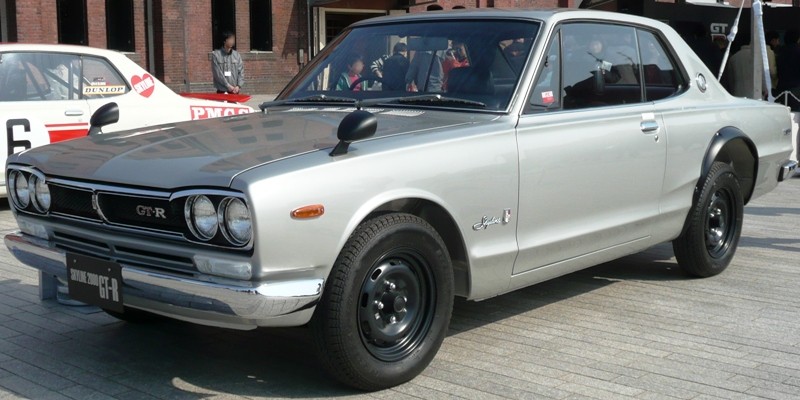
The first GT-R Skyline appeared in February 1969. Called the PGC-10 (KPGC-10 for later coupé version) internally and Hakosuka by fans. Hako means Box in Japanese, and suka is short for Skyline (Sukairain). It used the 2.0 L (1998 cc) S20 I6. This new DOHC engine (which was designed by the former Prince engineers) produced 160 hp (118 kW, 180 N m), and was similar to the GR8 engine used in the Prince R380 racing car.


The C10 raced against many cars including the Toyota Corona 1600GT (RT55), Isuzu Bellett GTR, Mazda Familia (R100) & Capella (RX-2) – even Porsche. In late 1971 the new Mazda RX-3 became the GT-R's main rival. The GT-R managed a few more victories before the RX-3 ended the GT-R's winning streak.The GT-R began as a sedan, but a 2-door coupé version was debuted in October 1970 and introduced in March 1971. The cars were stripped of unnecessary equipment to be as light as possible for racing, and performed well at the track. The sedan racked up 33 victories in less than two years, and the coupé stretched this to 50 through 1972.

Models:
1500 – 1.5 L G-15 I4, 88 hp (71 kW, 128 N m)
1500 – 1.5 L G-15 I4, 95 hp (71 kW, 128 N m)
1800 – 1.8 L G-18 I4, 105 hp (78 kW, 150 N m)
2000GT – 2.0 L L20 I6, 120 hp (90 kW, 167 N m)
2000GT-R – 2.0 L S20 I6, 160 hp (118 kW, 180 N m)

Body styles
C-10 4-door sedan or 5-door wagon 1968
GC-10 4-door 2000GT 1969
PGC-10 4-door GT-R Skyline 1969
KPGC-10 2 Door GT-R Skyline 1970
KGC-10 2000GT-X 2-door 1971
KGC-10 2000GT-X 4-door 1972
HGLC10 2000/2400GT 4-door Left Hand Drive

Kenmeri Skyline

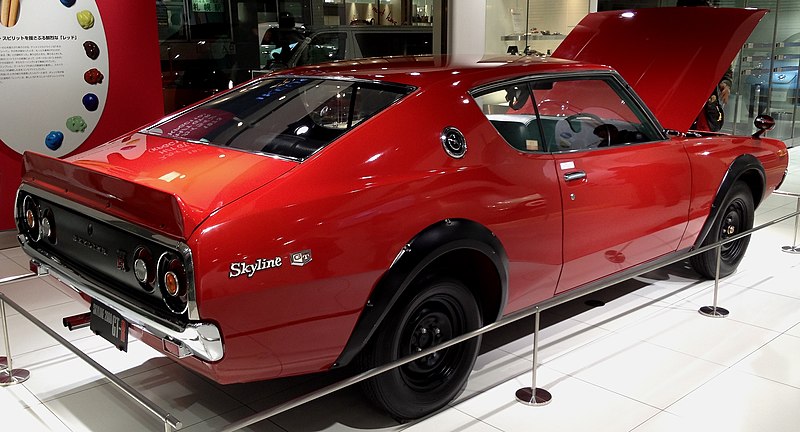
The C110 generation was produced from 1972 through 1977. For export in the 1970s, the C110 and GC110 Skyline was sold as the Datsun K-series, with models such as the Datsun 160K, 180K and Datsun 240K.

The body styles were, once again, four-door sedan, two-door hardtop coupé, and five-door station wagon. The C110 was more fussy in its styling than its predecessor, particularly so in wagon form, where unusually for a wagon design, no windows were fitted between the C and D pillars. Its appearance seems to be influenced by the 1970–1975 Citroën SM. The C110 was the first version to return to the round rear tail and brake lights introduced in 1963 albeit with dual units from the previous generation, and the appearance has become a traditional Skyline feature. The styling also influenced a smaller, more affordable two-door coupe, called the Silvia, introduced in 1975. Nissan introduced its emission control technology, primarily consisting of fuel injection on trim packages ending with an "E", using the moniker Nissan NAPS also in 1975.

The C110 Skyline was better known as the "Ken & Mary" or "Kenmeri" Skyline, stemming from the advertisement campaign in Japan at the time which featured a young couple (Ken and Mary) who relaxed and enjoyed the countryside in Ken and Mary's Skyline . The ads were highly successful and perhaps as a result the C110 was sold in very large numbers in Japan. It sold just as well in Australia (in a 2.4L 6-cylinder form, badged as "Datsun 240K"), though few survive today. There, the 240K was about the same price as a Ford Falcon GT or BMW 5 series, around AUD$5000.

The Nissan Skyline GT-R hardtop arrived in September 1972 but only lasted until March 1973, when Nissan ceased its production. The oil crisis saw many people preferring economy cars and high-performance sports cars were looked down upon. Nissan pulled out of Motor Racing, so there was no purpose to the GT-R. It was not officially exported anywhere, although Nissan contemplated exporting to Australia. Only 197 KPGC110 GT-Rs were ever sold in Japan, through specialist Nissan Performance shops (before it was called NISMO). This was the last GT-R for 16 years until the BNR32 in 1989.

Models:
1600 – 1.6 L G16 I4
1800 – 1.8 L G18 I4
2000GT-X – 2.0 L L20A I6, 130 hp (96 kW, 172 N m)
2000GT-R – 2.0 L S20 I6, 160 hp (118 kW, 180 N m)

Wednesday, 4 May 2016

Nissan Skyline GT-R 5th Gen

Nissan Skyline GT-R

Fifth generation (1999–2002)
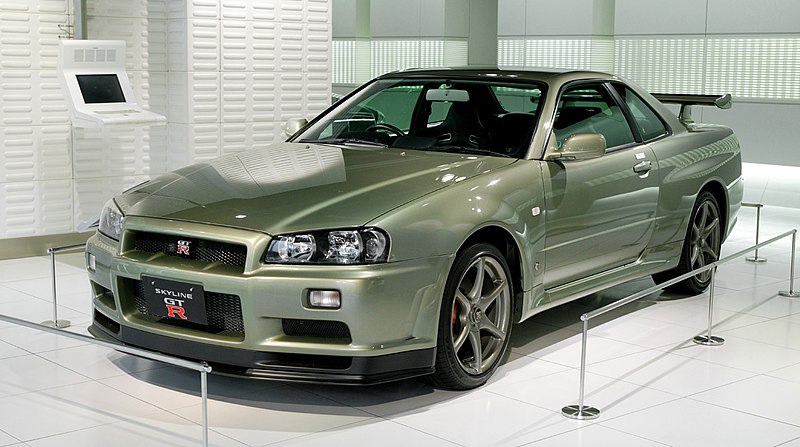
The GF-BNR34 (R34) Skyline GT-R and GT-R V·spec models were released in January 1999. The R34 GT-R was also shorter (from front to rear), and the front overhang reduced. The valve covers were painted glossy red (color code Cherry Red Effect Z24 or X1020), as opposed to black in previous models.


A new feature on the R34 GT-R is a 5.8" LCD multifunction display on the center of the dashboard, which shows seven different live readings of engine and vehicle statistics such as turbocharger pressure (1.2 bar max), oil and water temperature, among others. The GT-R V·spec model added two extra features to the display: intake and exhaust gas temperatures. Nismo Multi-function Displays (MFD) can be bought at an extra cost, they include a lap timer, G-Force meter and an increase in boost pressure measurement to 2 bar. The R34 GT-R was made shorter in response to customer concerns who thought the R33 was too bulky.

Like the R33, the new R34 GT-R V·spec (Victory Specification) models come equipped with theATTESA E-TS Pro system and an Active LSD at the rear, while standard GT-R models come with the non-Pro system and a conventional mechanical differential. The V.spec model also had firmer suspension and lower ground clearance, thanks to front and side splitters, as well as a rear carbon fiber air diffuser, designed to keep air flowing smoothly under the car.

Another special model of the R34 GT-R is the M·spec. It was similar to the V.spec, but had special "Ripple control" dampers, revised suspension set up, stiffer rear sway bar and a leather interior with heated front seats. The 'M' on the M·Spec stood for Mizuno who is the chief engineer of Nissan.

At the time of the R34's release, like the R32 and R33, Nissan released an R34 N1 model. The R34 GT-R N1 was equipped similar to the R32 and R33 N1 models – a homologation special. It was sold without air conditioning, audio equipment, rear wiper, or trunk lining, but ABS remained. The new R34 N1 was also given the new R34 N1 engine. Only 45 R34 V.spec N1 models were produced from the factory, 12 of which Nismo used for Super Taikyu racing. The rest were sold to various customers, mostly racing teams and tuning garages.

The V·spec version was also imported into the UK with a number of modifications carried out on the car. These included 3 additional oil coolers, revised ECU map, full Connolly leather interior, underbody diffusers, stiffer suspension, active rear limited slip differential, extra display feature on the in car display.


In October 2000, Nissan released the V·spec II, replacing the V·spec. The V·spec II has increased stiffness in the suspension (even stiffer than the original V·spec) and had larger rear brake rotors. It also comes equipped with a carbon fiber hood equipped with a NACA duct, which is lighter than the aluminum that all other GT-R hoods are made from. Also different on the V·spec II was an iridium center console and aluminum pedals. The seats were upholstered with black cloth rather than the gray cloth used on previous R34 GT-R models, and the amber turn lenses were replaced with white versions. With the exception of the carbon fiber bonnet, the standard trim level GT-R also received these updates.

In February 2002 Nissan released a final production model of the R34 GT-R called the Skyline GT-R V·spec II Nür[26] and the Skyline GT-R M·spec Nür. The Nür was named after the famous German Nürburgringracetrack, where the Skyline was developed. In total 1000 R34 GT-R Nür(s) were made, 750 were V·spec II Nürs' and 250 were M·Spec Nürs'. The Nür model featured an improved RB26DETT based on the N1 racing engine. The standard turbochargers were upgraded to larger versions with a slight increase in boost and the ceramic blades were replaced with steel versions. This has increased lag, but to compensate the turbo's durability was improved while being able to handle a bigger boost increase. This allowed tuners to increase the boost safely with standard turbos up to 340 kW (450 hp) at the crank. The V.spec II Nür is based on the regular V·spec II model, and the M·spec Nür was based on the regular M·spec model. Other than the addition of the Nür engine, the Nür models also included a different color of stitching on the interior trim, as well as a speedometer reading up to 300 km/h (186 mph), and gold valve covers instead of red. Due to Japanese car industry norms at the time, the car was advertised as having 206 kW (276 hp) but it actually had over 246 kW (330 hp) when it left the factory.
Standard Cars = 3,965
V·Spec = 1,308
V·Spec UK = 80
V·Spec N1 = 45
V·Spec II = 5,512
V·Spec II Nür = 750[26]
V·Spec II N1 = 18
M·Spec = 228[27]
M·Spec Nür = 250
V-Spec II NISMO Z-tune 2 = 19
Total = 12,175

Z-Tune
Nismo originally designed the concept of the Z-tune in 2002 when Nissan was putting an end to the R34 Skyline production. The first Z-tune was built in 2003, using a used 2002 Skyline GT-R V·spec II. It was built with a concept RB26DETT 'Z1' engine. This engine was based on Nissan's Le Mans GT2 and GT500 racing experiences. As with the racing vehicles a strengthened engine block and stroked crankshaft were utilized. The engine was also bored. With the new displacement of 2.8 L and upgraded turbo-chargers the Z1 produced 370 kW (500 hp). The Z-Tune had a 0–100 km/h (0–60 mph) time in 3.8 seconds and has a top speed of over 203 mph.

Nismo was then given the approval from Nissan to build Z-tune models for the Nismo anniversary. Nismo then purchased 20 used R34 GT-R V·spec, each with less than 18,000 miles (29,000 km) on the clock, they were then completely stripped and were resprayed to a "Z-tune Silver," a special color exclusively for the Z-tune.[28] For each of the 20 production models, the 2.8 L engine was revised to allow it to reach 8000 rpm. The turbochargers were supplied by IHI in Japan. The engine is advertised as making as much as 370 kW (500 hp) (for warranty reasons). This second revision of the Z-tune engine is called the 'Z2'. The bodywork is designed with the same functional components used in Nismo's GT500 racing cars, such as engine bay vents on the hood and fenders, as well as wider fenders for wider wheels. The Z-tune is also improved with an aggressive suspension setup from Sachs, and a specially designed Brembohand brake system.

The entire car is essentially handmade, with the car being completely stripped and re-built from the chassis up. Engineers reinforced and stiffened the chassis seam welding in key areas such as the door seams and door frames and added carbon fiber to the strut towers and transmission tunnel and the engine bay, completely redesigning the suspension, drivetrain, engine, gearbox and other components so as to work at maximum efficiency and reliability as is expected of a road-going vehicle. Although Nismo planned on building 20 cars, they ceased production on only 19 (including 2 prototypes).[29] The Z-tune is often regarded as the most expensive (prices for some have been known to exceed US$290,000) street legal GT-R ever built.


Replacement


Following the end of R34 production in 2002, Nissan announced they would separate the GT-R model from the Skyline name, creating an entirely new vehicle—though based on the same platform as the Skyline. This new car, now known simply as the Nissan GT-R, debuted in 2007 in Tokyo. Released to consumers in 2008, it was the first GT-R available worldwide, entering the North American market for the first time.

Though based on the FM platform used by the V36 generation Skyline,the GT-R uses an evolved Premium Midship (PM) platform. The car retains its heritage by using the chassis code DBA-R35, or simply R35.

Powertrain

The GT-R of the 1990s included a 2.6 L straight six-cylinder twin-turbo engine producing 206 kW (276 hp). The stock turbo-chargers were of a hybrid steel/ceramic design allowing them to spool up faster due to the light nature of the ceramic exhaust wheel.

The drive train delivered power to all four wheels using an electronically controlled all-wheel-drive system Nissan called the ATTESA E-TS. The ATTESA E-TS system used two accelerometers mounted under the center console, which fed lateral and longitudinal inputs to the ECU. The ECU then controlled power delivery to the front wheels via an electronic torque split converter. In 1995, the ATTESA E-TS Pro was introduced as an option for R33 GT-R customers, and came as standard equipment in GT-R V.spec models. It was later standard equipment in all GT-R models for the R34 Skyline GT-R. The ATTESA E-TS Pro added an Active Limited Slip Differential, which was controlled by the onboard ATTESA computer. This was only for the rear differential, as the front differential remained as a normal Limited Slip Differential. The ATTESA E-TS Pro was also advertised in brochures as adding an electronically controlled 4-channel ABS brake system. Although it is not related to the all wheel drive system, it uses much of the same sensors, and the same computer. The R32 could be switched from AWD to RWD by removing the 4WD fuse, but R33 and R34 models had to have the front tailshaft removed, or the centre diff can be depressurised for 'towing mode' as specified in the owners manual.

The car also had computer-controlled all wheel steering system referred to as HICAS. The HICAS system activated when the vehicle exceeded 80 km/h (50 mph) and controlled the steering of the rear wheels in the same direction as the front to improve turn in on entry to corners. It should be noted however that this feature is often seen as more of a hindrance than help in race applications. The system tends to favor less advanced drivers, and can make the rear suspension unstable during high speed cornering. For this reason many kits are available to override this system. These kits usually loop the hydraulic lines back on themselves on the R32. Kits for the R33/34 models use a simple lock out bar—or a Tomei kit, which also alters the electrical control system ( the 33 and 34 had electronic HICAS). These modifications strive to make the car more predictable when driving at the limit of traction.

While the published figures from Nissan were as quoted above, tests showed the car had a factory power output of closer to 330 PS (243 kW; 325 hp) at the flywheel. The lower published figure was Nissan's response to the need to abide by a gentleman's agreement between the Japanese auto manufacturers not to release a car to the public exceeding 280 PS (206 kW; 276 hp) of power output.
N1 engines

RB26DETT N1 is an upgraded version of the standard RB26DETT engine. It was developed by Nissan Kohki's REINIK division for NISMO and N1 race cars. The standard RB26DETT, although known for its durability, proved to require too much maintenance for Group N (N1 class) racing conditions. REINIK started with strengthened RB26DETT block. N1 block is identified by its 24U number stamped on the block (05U standard blocks). The cylinder walls are thicker and water cooling channels are enhanced to increase flow. It also received an upgraded oil pump and water pump, to improve the cooling and lubrication for race conditions. The pistons have 1.2 mm (0.047 in) top rings and were balanced before assembly but otherwise very close to standard. The connecting rods are also similar to standard but made from slightly stronger material and balanced. Standard crankshaft is balanced to a higher level. Higher flow exhaust manifolds and turbochargers were added for increased torque and slightly higher top-end power. Turbine wheels on the N1 turbochargers are also made from steel for durability, rather than the lighter but weaker ceramic found on the standard turbine.

The R32 Skyline GT-R N1 street car marked the N1 engine's introduction to the consumer. R32, 33, and 34 N1 street cars were known for lack of amenities and their light weight. The R33 N1 engine and turbochargers were slightly revised, and the R34 N1 engine saw further improvement. The camshaft timing was altered slightly for more torque. R33 and R34 N1 turbochargers are the same size however R34 N1s use a ball bearing center section. NISMO states the ball bearings in the R34 N1 allow them to spool 400rpm faster than R33 N1.

The final N1 engine is the R34 Nür engine. The only differences are the cam cover color change from red to gold and R34 Nür edition was a fully loaded street car. There were 1000 Nür engines made for use in the R34 V.spec II Nür and R34 M-spec Nür models.

Nissan Skyline GT-R 4th Gen


Nissan Skyline GT-R

Fourth generation (1995–1998)
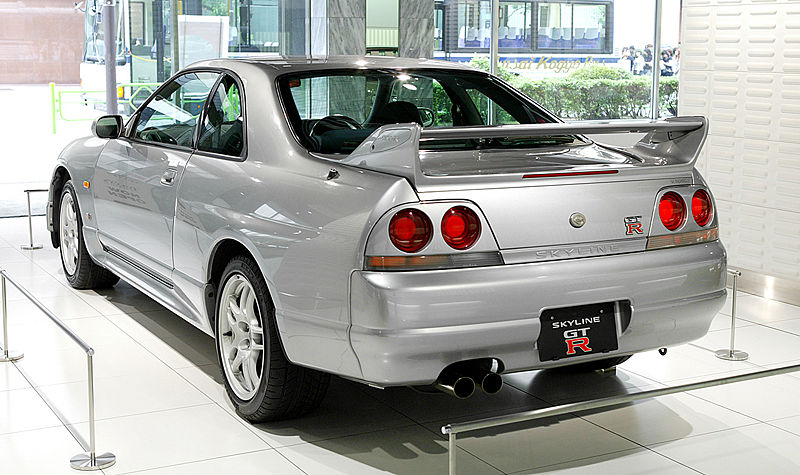
The E-BCNR33 (R33) was developed in 1995 as a successor to the R32 model. The engine in the R33 was nearly identical to the R32. It used the same turbochargers and the same specification for themanual gearbox, although the syncros were stronger. The engine corrected the R32's weak oil pump drive collar, which tended to fail in higher power applications, by using a wider collar. The base model R33 GT-R weighs 1,540 kg (3,400 lb).


The R33 GT-R launched in January 1995 with the base model GT-R and the V.spec model. The V.spec model weighed in 10 kg (22 lb) heavier, and had sportier suspension resulting in lower ground clearance. The V.spec also featured the newer ATTESA E-TS Pro all wheel drive system, which included an Active Limited Slip differential. The V.spec model also included a four-wheel independent channel anti-lock braking system.

At the same time as the release of the R33 GT-R and GT-R V.spec, Nissan released the R33 GT-R V.spec N1 model. Changes made in the R33 N1 are similar to those in the R32 N1. The car was made lighter by removing the ABS, air conditioning, sound system, rear wiper, and trunk carpet. The R33 GT-R V.spec N1 received the slightly revised R33 N1 engine.

The R33 ended production on 9 November 1998. The last one that rolled off the line came in a R34 color, as it shared the same color code.


1996 NISMO - LM Limited

There were several limited editions of the BCNR33 produced by NISMO - Nissan's Motorsport division. The first, the LM version, was released in May 1996 to celebrate Nissan's participation in the 24-hours of Le Mans. The only body colour available for the R33 LM was Champion Blue. The car had a hood-splitter lip to direct air to the upper front aperture, and a carbon-fibre rear wing with Gurney flap. There were carbon-fibre inserts on the rear wing fins with a GT-R badge on the inserts. The "GT-R Skyline" logo under the checkered flag was placed on the C-pillars. Most of the LM's were based on the standard model but a few were based on the V-Spec. Nissan released just 98 of this model to the Japanese market and only 14 of these were V-Spec's. Nissan entered two R33 GT-R cars in the 1995 Le Mans 24 hour race where the number 22 car finished tenth overall. This was remarkable considering it was essentially running the same RB26 motor and going up against supercars of that era like the mighty Mclaren F1 GTR.Limited Edition Factory fitted extras

Championship Blue (code BT2).
Carbon Fibre Rear Wing Blade.
N1 Front Brake Cooling Ducts.
N1 Bonnet Lip.
Commemorative GT-R Decals on C-Pillars.
1997 NISMO 400R[edit]
For other uses, see 400R 

A special edition R33 was released on November 3, 1997 called the 400R, with R standing for Racing. Overall development and planning was by NISMO (Nissan Motorsports International). But, its bored and stroked RB26DETT engine, the RBX-GT2, was engineered and produced by REINIK (later renamed REIMAX – "REINIK to the MAX"). The engine featured 77.7 mm stroke crankshaft (73.7 mm stock), forged 87 mm pistons (86 mm cast stock), upgraded rods, polished ports, high lift camshafts, upgraded oil system, larger exhaust manifolds and higher output turbochargers. NISMO produced an upgraded exhaust, a twin-plate clutch, and intercooler system. Nismo brake pads were fitted to the car. 400R exclusive aerodynamic updates were also added, such as wider fenders, side skirts, a new rear bumper, a new front bumper with bigger air scoops, and a redesigned bonnet and rear spoiler made of carbon fiber. The 400R was also fitted with 18x10 Nismo LM-GT1s. The car developed 300 kW (400 hp) and 347 lb·ft (470 N·m), which allowed a top speed of over 186 mph (300 km/h), and enabled it to reach 0–97 km/h in 4.0 seconds. 370 kW (500 hp) is easily achieved with a higher boost setting. NISMO had originally planned to produce 100 units of the 400R, however only 44 units were made before production of the R33 ended in 1998.
Production figures

Japanese market chassis numbers 000094 and 000100 were never used by Nissan for unknown reasons.

Standard Japanese market Skyline GT-R cars = 9,871
V-Spec Japanese market Skyline GT-R cars = 6,551
V-Spec UK market Skyline GT-R cars = 100 (These have a unique seventeen digit UK Chassis Number and were all sold exclusively by Middlehurst Nissan)
Total Skyline GT-R's Worldwide = 16,520

(Figures include N1 and LM Limited Versions)

Powertrain

The GT-R of the 1990s included a 2.6 L straight six-cylinder twin-turbo engine producing 206 kW (276 hp). The stock turbo-chargers were of a hybrid steel/ceramic design allowing them to spool up faster due to the light nature of the ceramic exhaust wheel.

The drive train delivered power to all four wheels using an electronically controlled all-wheel-drive system Nissan called the ATTESA E-TS. The ATTESA E-TS system used two accelerometers mounted under the center console, which fed lateral and longitudinal inputs to the ECU. The ECU then controlled power delivery to the front wheels via an electronic torque split converter. In 1995, the ATTESA E-TS Pro was introduced as an option for R33 GT-R customers, and came as standard equipment in GT-R V.spec models. It was later standard equipment in all GT-R models for the R34 Skyline GT-R. The ATTESA E-TS Pro added an Active Limited Slip Differential, which was controlled by the onboard ATTESA computer. This was only for the rear differential, as the front differential remained as a normal Limited Slip Differential. The ATTESA E-TS Pro was also advertised in brochures as adding an electronically controlled 4-channel ABS brake system. Although it is not related to the all wheel drive system, it uses much of the same sensors, and the same computer. The R32 could be switched from AWD to RWD by removing the 4WD fuse, but R33 and R34 models had to have the front tailshaft removed, or the centre diff can be depressurised for 'towing mode' as specified in the owners manual.

The car also had computer-controlled all wheel steering system referred to as HICAS. The HICAS system activated when the vehicle exceeded 80 km/h (50 mph) and controlled the steering of the rear wheels in the same direction as the front to improve turn in on entry to corners. It should be noted however that this feature is often seen as more of a hindrance than help in race applications. The system tends to favor less advanced drivers, and can make the rear suspension unstable during high speed cornering. For this reason many kits are available to override this system. These kits usually loop the hydraulic lines back on themselves on the R32. Kits for the R33/34 models use a simple lock out bar—or a Tomei kit, which also alters the electrical control system ( the 33 and 34 had electronic HICAS). These modifications strive to make the car more predictable when driving at the limit of traction.

While the published figures from Nissan were as quoted above, tests showed the car had a factory power output of closer to 330 PS (243 kW; 325 hp) at the flywheel. The lower published figure was Nissan's response to the need to abide by a gentleman's agreement between the Japanese auto manufacturers not to release a car to the public exceeding 280 PS (206 kW; 276 hp) of power output.
N1 engines


RB26DETT N1 is an upgraded version of the standard RB26DETT engine. It was developed by Nissan Kohki's REINIK division for NISMO and N1 race cars. The standard RB26DETT, although known for its durability, proved to require too much maintenance for Group N (N1 class) racing conditions. REINIK started with strengthened RB26DETT block. N1 block is identified by its 24U number stamped on the block (05U standard blocks). The cylinder walls are thicker and water cooling channels are enhanced to increase flow. It also received an upgraded oil pump and water pump, to improve the cooling and lubrication for race conditions. The pistons have 1.2 mm (0.047 in) top rings and were balanced before assembly but otherwise very close to standard. The connecting rods are also similar to standard but made from slightly stronger material and balanced. Standard crankshaft is balanced to a higher level. Higher flow exhaust manifolds and turbochargers were added for increased torque and slightly higher top-end power. Turbine wheels on the N1 turbochargers are also made from steel for durability, rather than the lighter but weaker ceramic found on the standard turbine.

The R32 Skyline GT-R N1 street car marked the N1 engine's introduction to the consumer. R32, 33, and 34 N1 street cars were known for lack of amenities and their light weight. The R33 N1 engine and turbochargers were slightly revised, and the R34 N1 engine saw further improvement. The camshaft timing was altered slightly for more torque. R33 and R34 N1 turbochargers are the same size however R34 N1s use a ball bearing center section. NISMO states the ball bearings in the R34 N1 allow them to spool 400rpm faster than R33 N1.

The final N1 engine is the R34 Nür engine. The only differences are the cam cover color change from red to gold and R34 Nür edition was a fully loaded street car. There were 1000 Nür engines made for use in the R34 V.spec II Nür and R34 M-spec Nür models.

Nissan Skyline GT-R 3rd Gen

Nissan Skyline GT-R

Third generation (1989–1994)
Concept

After cancelling the Skyline GT-R in 1973, Nissan revived the GT-R again in 1989. At the time Nissan was competing in Group A Racing with the Skyline GTS-R. Nissan wanted to retire the GTS-R in favor of a more competitive vehicle. The new generation GT-R, E-BNR32 chassis (commonly shortened to R32), was designed to dominate Group A racing.


Nissan Kohki (Nissan's power train engineering and manufacturing facility) originally tested a twin turbocharged 2350cc bored and stroked version of the RB20 engine. This set up produced 233 kW (313 hp) and used a RWD drivetrain. Under Group A regulations, a turbocharged engine must multiply its engine displacement by 1.7, putting the new Skyline in the 4000 cc class, and requiring the use of 10-inch-wide tires. Knowing that they would be required to use 10-inch-wide tires, Nissan decided to make the car all wheel drive. Nissan developed a special motorsport-oriented AWD system for this purpose called the ATTESA E-TS. Although this assisted with traction, it made the car 100 kg (220 lb) heavier; the added weight put the GT-R at a disadvantage to other cars in the 4000 cc class. Nissan then made the decision to increase the displacement to 2600 cc, and put the car in the 4500 cc class, with the car's weight near-equal to competing cars. The 4500 cc class also allowed for 11-inch-wide tires. New engine block and heads were then developed to better match the increased displacement. The result was a 600 horsepower car. Later REINIK (Racing & Rally Engineering Division Incorporated Nissan Kohi) produced Group A racing engines between 373–485 kW (500–650 hp) depending on track conditions.
Production

This new 2.6 L all wheel drive concept was put into production as the R32 Nissan Skyline GT-R. The R32 developed 206 kW (276 hp) and 266 lb·ft (361 N·m) of torque, it had a curb weight of 1,430 kg (3,146 lbs). Nissan officially started its production run August 1989, and began its Group A campaign in 1990. Due to strict Group A homologation rules, Nissan was required to also sell a series of the Skyline GT-R that more accurately reflected the car they use in Group A racing. They called this series the Skyline GT-R 'Nismo' edition.

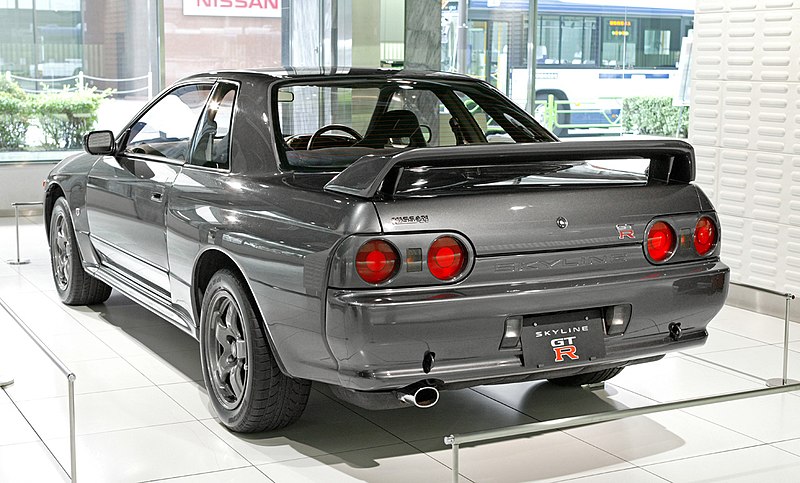
The Skyline GT-R 'Nismo', introduced on 22 February 1990, has a total production of 560 units as required for the "Evolution" models regulation (over 500). Only 500 of the cars were sold to the public, with 60 being held by Nissan to turn into race cars. Its purpose is tohomologate a number of aerodynamic changes used in Group A racing. Changes include additional ducts in the front bumper to improve airflow to the intercooler, a bonnet lip spoiler to direct more air into the engine bay, and an additional boot lip spoiler to provide more downforce. The 'Nismo' GT-R was only available in Gunmetal Grey.


The Skyline GT-R 'N1' model, introduced on July 19, 1991, was designed for home-market N1 racing with a total of 228 units produced. The most notable change was in the engine, which was upgraded to the R32-N1 specification. The car was also lightened by the removal of the ABS, air conditioning, sound system, rear wiper, trunk carpet, and the use of light-weight headlights. No color options were available and all 'N1' cars were delivered with a thin layer of Crystal White paint. The result was a 30 kg weight savings for a curb weight of 1,400 kg.

To celebrate the success of the GT-R in both Group N and Group A racing, Nissan introduced the Skyline GT-R V.spec ("Victory SPECification") car on 3 February 1993. The V.spec added Brembo brakes and a retuned ATTESA E-TS system to the Nismo and N1 packages, as well as 17" BBS wheels with 225/45/17 tires. The V.spec has a list price of ¥5,260,000.

Finally on 14 February 1994 the Skyline GT-R V.spec II was released, with the only change being wider 245/45/17 tires. In addition, both the V.spec and V.spec II had a curb weight of 1,480 kg (3,256 lbs), weighing 50 kg (110 lbs) more than the standard GT-R.Total production of the V.spec I and II was 1,453 and 1,303 units respectively.

Total production of the R32 Skyline GT-R was 43,934 units, with production starting on August 21, 1989. An above average proportion of the GT-R's were sold in white: this is likely because white is the national racing color of Japan in international motorsport.

-Standard Cars = 40,390
-NISMO Group A Evolution = 560
-V.spec = 1,453
-V.spec II = 1,303
-N1 Race Version = 228
-Total = 43,934

Powertrain

The GT-R of the 1990s included a 2.6 L straight six-cylinder twin-turbo engine producing 206 kW (276 hp). The stock turbo-chargers were of a hybrid steel/ceramic design allowing them to spool up faster due to the light nature of the ceramic exhaust wheel.

The drive train delivered power to all four wheels using an electronically controlled all-wheel-drive system Nissan called the ATTESA E-TS. The ATTESA E-TS system used two accelerometers mounted under the center console, which fed lateral and longitudinal inputs to the ECU. The ECU then controlled power delivery to the front wheels via an electronic torque split converter. In 1995, the ATTESA E-TS Pro was introduced as an option for R33 GT-R customers, and came as standard equipment in GT-R V.spec models. It was later standard equipment in all GT-R models for the R34 Skyline GT-R. The ATTESA E-TS Pro added an Active Limited Slip Differential, which was controlled by the onboard ATTESA computer. This was only for the rear differential, as the front differential remained as a normal Limited Slip Differential. The ATTESA E-TS Pro was also advertised in brochures as adding an electronically controlled 4-channel ABS brake system. Although it is not related to the all wheel drive system, it uses much of the same sensors, and the same computer. The R32 could be switched from AWD to RWD by removing the 4WD fuse, but R33 and R34 models had to have the front tailshaft removed, or the centre diff can be depressurised for 'towing mode' as specified in the owners manual.

The car also had computer-controlled all wheel steering system referred to as HICAS. The HICAS system activated when the vehicle exceeded 80 km/h (50 mph) and controlled the steering of the rear wheels in the same direction as the front to improve turn in on entry to corners. It should be noted however that this feature is often seen as more of a hindrance than help in race applications. The system tends to favor less advanced drivers, and can make the rear suspension unstable during high speed cornering. For this reason many kits are available to override this system. These kits usually loop the hydraulic lines back on themselves on the R32. Kits for the R33/34 models use a simple lock out bar—or a Tomei kit, which also alters the electrical control system ( the 33 and 34 had electronic HICAS). These modifications strive to make the car more predictable when driving at the limit of traction.

While the published figures from Nissan were as quoted above, tests showed the car had a factory power output of closer to 330 PS (243 kW; 325 hp) at the flywheel. The lower published figure was Nissan's response to the need to abide by a gentleman's agreement between the Japanese auto manufacturers not to release a car to the public exceeding 280 PS (206 kW; 276 hp) of power output.
N1 engines

RB26DETT N1 is an upgraded version of the standard RB26DETT engine. It was developed by Nissan Kohki's REINIK division for NISMO and N1 race cars. The standard RB26DETT, although known for its durability, proved to require too much maintenance for Group N (N1 class) racing conditions. REINIK started with strengthened RB26DETT block. N1 block is identified by its 24U number stamped on the block (05U standard blocks). The cylinder walls are thicker and water cooling channels are enhanced to increase flow. It also received an upgraded oil pump and water pump, to improve the cooling and lubrication for race conditions. The pistons have 1.2 mm (0.047 in) top rings and were balanced before assembly but otherwise very close to standard. The connecting rods are also similar to standard but made from slightly stronger material and balanced. Standard crankshaft is balanced to a higher level. Higher flow exhaust manifolds and turbochargers were added for increased torque and slightly higher top-end power. Turbine wheels on the N1 turbochargers are also made from steel for durability, rather than the lighter but weaker ceramic found on the standard turbine.

The R32 Skyline GT-R N1 street car marked the N1 engine's introduction to the consumer. R32, 33, and 34 N1 street cars were known for lack of amenities and their light weight. The R33 N1 engine and turbochargers were slightly revised, and the R34 N1 engine saw further improvement. The camshaft timing was altered slightly for more torque. R33 and R34 N1 turbochargers are the same size however R34 N1s use a ball bearing center section. NISMO states the ball bearings in the R34 N1 allow them to spool 400rpm faster than R33 N1.

The final N1 engine is the R34 Nür engine. The only differences are the cam cover color change from red to gold and R34 Nür edition was a fully loaded street car. There were 1000 Nür engines made for use in the R34 V.spec II Nür and R34 M-spec Nür models.

Nissan Skyline GT-R 2nd Gen


Nissan Skyline GT-R

Second generation (1973)

The KPGC10's successor, the KPGC110, was released in 1973 after its introduction at the 1972 Tokyo motor show. Powered by a 1989 cc I6 S20 engine, the second generation GT-R delivered power to the rear wheels through a 5-speed manual gearbox. This car also had both front and rear disk brakes. The suspension was a semi-trailing ring arm setup and minor aerodynamic parts were added.


This edition of the GT-R was also known as the "Kenmeri" Skyline, due to a popular advertisement featuring a young couple (Ken and Mary) enjoying the Hokkaido countryside. The advertisement later spawned a hit song by Buzz, and the tree featured in the advertisement later became a minor star itself.


Unfortunately, the second generation GT-R was unsuccessful, for a gasoline crisis hit in the early 1970s, drying out any demand for high-performance sports cars. A total of 197 cars were built by the end of its short production run. For the next decade, this was the last GT-R until the production of the R32 in 1989.

Nissan Skyline GT-R 1st Gen


Nissan Skyline GT-R


First generation (1969–1972)

The first Skyline GT-R, known by the internal Nissan designation PGC10, was released on 4 February 1969, and was exclusive to Japanese Nissan dealership network called Nissan Prince Store when the Prince company was integrated into Nissan operations in 1966. It was available originally as a four-door sedan after a public debut at the October 1968 Tokyo Motor Show. It was advertised alongside the Nissan R380 racecar to showcase the Skyline's racing heraldry. It was equipped with the 2.0 L DOHC S20 I6 producing 160 hp (120 kW) at 7000 rpm and 177 N·m (131 ft·lbf) of torque at 5600 rpm. Power was delivered to the rear wheels by a 5-speed manual transmission. The first Skyline GT-R rode on a semi-trailing arm strut suspension. It was available as a coupe in March 1971 with the chassis code KPGC10.


A popular name for the PGC and KPGC10 Skyline GT-R was "Hakosuka," which combines the Japanese word for box ("hako" or ハコ) and the pronounced abbreviation of skyline ("Suka" or スカ as in スカイライン or "sukairain").

A total of 1,945 PGC and KPGC10 Skyline GT-Rs were produced.

Nissan Skyline GT-R

Nissan Skyline GT-R

The Nissan Skyline GT-R is a Japanese Grand tourer based on the Nissan Skyline range.

The first GT-Rs were produced from 1969 to 1973. After a 16-year hiatus since the KPGC110 in 1972, the GT-R name was revived in 1989 with the Skyline R32 due to its popularity. This car was nicknamed "Godzilla" by the Australian motoring publication Wheels in its July 1989 edition. The GT-R proceeded to win the JTCC Group A series championship 4 years in a row, and also had success in the Australian Touring Car Championship winning from 1990 to 1992, until a regulation change excluded the GT-R in 1993.

The Skyline GT-R became the flagship of Nissan performance, showcasing many advanced technologies including the ATTESA E-TS 4WDsystem and the Super-HICAS four-wheel steering. The GT-Rs remained inexpensive compared to its European rivals, with a list-price of¥4,500,000 (US$31,000). Today, the car is popular for import drag racing, circuit track, time attack and events hosted by tuning magazines. Production of the Skyline GT-R ended in August 2002. The car was replaced by the Nissan GT-R, an independent vehicle not sold as a Skyline.

The Skyline GT-R was never manufactured outside Japan, and the sole export markets were Hong Kong, Australia and New Zealand, in 1991, and the UK (in 1997, thanks to the Single Vehicle Approval scheme) as used Japanese imports. Despite this, the car has become an iconic sports car, including in countries from the Western World (mainly the United Kingdom, Australia, New Zealand, South Africa, Ireland, Canada, and the United States). It has become notable through pop culture such as The Fast and the Furious series, Initial D,Shakotan Boogie, Wangan Midnight, Need For Speed series ,and Gran Turismo series.

The car was named at the time by BBC's Top Gear as the only true Japanese contribution in the line of supercars, and by Jeremy Clarksonas one of the best cars in the world.


The Skyline name originated from Prince automobile company, which developed and sold the Skyline line of sedans before merging with Nissan-Datsun. The GT-R abbreviation stands for Gran Turismo Racer while the GT-B stands for Gran Turismo Berlinetta. The Japanese chose to use Italian when naming the car – as most cars that were made in Japan at that time used Western abbreviations – to further enhance sales. The earliest predecessor of the GT-R, the S54 2000 GT-B, came second in its first race in 1964 to the purpose-built Porsche 904 GTS. The next development of the GT-R, the four-door PGC10 2000 GT-R, scored 33 victories in the one and a half years it raced, and by the time it attempted its 50th consecutive win, its run was ended by a Mazda Savanna RX-3. The car took 1000 victories by the time it was discontinued in 1972. The last of the original GT-Rs, the KPGC110 2000GT-R, used an unchanged S20 119 kW (160 hp) inline-6 engine from the earlier 2000 GT-R and only sold 197 units due to the worldwide energy crisis. This model was the only GT-R to never participate in a major race despite the sole purpose-built race car, which now resides in Nissan's storage unit for historical cars in Zama.

The Skyline continued into the 1990s when it became popular largely because it remained rear wheel drive, while most other manufacturers were focusing on front wheel drive cars.

Throughout its lifetime, various special editions containing additional performance-enhancing modifications, were released by Nissan and its performance division Nismo (Nissan Motorsport).


Tuesday, 3 May 2016

Drifting

Drifting (motorsport)

#drifting #cardrifting #motorsport

Drifting is a driving technique where the driver intentionally oversteers, causing loss of traction in the rear wheels or all tires, while maintaining control for the entirety of a corner. A car is drifting when the rear slip angle is greater than the front slip angle, to such an extent that often the front wheels are pointing in the opposite direction to the turn (e.g. car is turning left, wheels are pointed right or vice versa, also known as opposite lock or counter-steering).
As a motorsport discipline, professional drifting competitions are held worldwide and are judged according to the speed, angle, showmanship and line taken through a corner or set of corners.


History

Origin
Although the origin of drifting is not known, Japan was one of the earliest birthplaces of drifting. It was most popular in the All Japan Touring Car Championship races. Motorcycling legend turned driver, Kunimitsu Takahashi, was the foremost creator of drifting techniques in the 1970s. This earned him several championships and a legion of fans who enjoyed the spectacle of smoking tires. The bias ply racing tires of the 1960s-1980s lent themselves to driving styles with a high slip angle. As professional racers in Japan drove this way, so did the street racers.
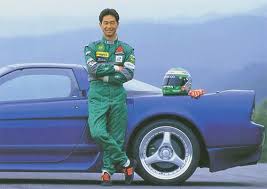
Keiichi Tsuchiya, known as the "Drift King" (ドリキン Dorikin?), became particularly interested by Takahashi's drift techniques. Tsuchiya began practicing his drifting skills on the mountain roads of Japan, and quickly gained a reputation amongst the racing crowd. In 1987, several popular car magazines and tuning garages agreed to produce a video of Tsuchiya's drifting skills. The video, known as Pluspy,[2] became a hit and inspired many of the professional drifting drivers on the circuits today. In 1988, alongside Option magazine founder and chief editor Daijiro Inada, he would help to organize one of the first events specifically for drifting called the D1 Grand Prix. He also drifted every turn in Tsukuba Circuit in Japan.


Popularity
One of the earliest recorded drift events outside Japan was in 1996, held at Willow Springs Raceway in Willow Springs, California hosted by the Japanese drifting magazine and organizationOption. Inada, founder of the D1 Grand Prix in Japan, the NHRA Funny Car drag racer Kenji Okazaki and Keiichi Tsuchiya, who also gave demonstrations in a Nissan 180SX that the magazine brought over from Japan, judged the event with Rhys Millen and Bryan Norris being two of the entrants.[3] Drifting has then since exploded into a massively popular form of motorsport in North America, Australia, Asia and Europe.
Drifting has evolved into a competitive sport where drivers compete almost exclusively in rear-wheel-drive cars, to earn points from judges based on various factors. At the top levels of competition, the D1 Grand Prix in Japan pioneered the sport. Others such as Formula D in the United States, DRIFT ALLSTARS King of Europe and the British Drift Championship in Europe,WDS in China, Formula Drift Asia in the Malaysia/Singapore/Thailand/Indonesia, NZ Drift Series in New Zealand, Australian Drifting Grand Prix and Greek Drift Championship (Drift Wars) have come along to further expand it into a legitimate motor sport worldwide. The drivers within these series were originally influenced by the pioneers from D1 Japan and are able to keep their cars sliding for extended periods of time, often linking several turns.

Drift competition
Drifting competitions are judged based on line, angle, speed and show factor. Line involves taking the correct line, which is usually announced beforehand by judges. The show factor is based on multiple things, such as the amount of smoke, how close the car is to the wall or designated clipping point, and the crowd's reaction. Angle is the angle of a car and more importantly the turned wheels in a drift, speed is the speed entering a turn, the speed through a turn, and the speed exiting the turn; faster is better.
The judging takes place on just a small part of the circuit, a few linking corners that provide good viewing, and opportunities for drifting. The rest of the circuit is irrelevant, except as it pertains to controlling the temperature of the tires and setting the car up for the first judged corner. In the tandempasses, the lead driver often feints his or her entry to the first corner to upset the chase driver, however in some European series, this practice is frowned upon by judges and considered foul play, resulting in deduction of points.


There are typically two sessions, a qualifying/practice session, and a final session. In the qualifying sessions, referred as Tansō (単走:solo run), drifters get individual passes in front of judges (who may or may not be the final judges) to try to make the final 16. This is often on the day preceding the final.


The finals are tandem passes, referred as Tsuisō (追走:chasing race). Drivers are paired off, and each heat comprises two passes, with each driver taking a turn to lead. The best of the 8 heats go to the next 4, to the next 2, to the final. The passes are judged as explained above, however there are some provisos such as: 
-Overtaking the lead car under drift conditions is ok if you don't interrupt the lead car's drift. 
-Overtaking the lead car under grip conditions automatically forfeits that pass. 
-Spinning forfeits that pass, unless the other driver also spins. 
-Increasing the lead under drift conditions helps to win that pass. 
-Maintaining a close gap while chasing under drift conditions helps to win that pass.
Points are awarded for each pass, and usually one driver prevails. Sometimes the judges cannot agree, or cannot decide, or a crowd vocally disagrees with the judge's decision.In such cases more passes may be run until a winner is produced. Sometimes mechanical failure determines the battle's outcome, either during or preceding a heat. If a car cannot enter a tandem battle, the remaining entrant (who automatically advances) will give a solo demonstration pass. In the event of apparently close or tied runs, crowds often demonstrate their desire for another run with chants of 'one more time'.
There is some regional variation. For example in Australia, the chase car is judged on how accurately it emulates the drift of the lead car, as opposed to being judged on its own merit, this is only taken into consideration by the judges if the lead car is on the appropriate racing line. Other variations of the tansou/tsuiso and the tansou only method is the multi-car group judging, seen in the Drift Tengoku videos where the four car team is judged in groups.
Usually, drift cars are light to moderate weight rear-wheel-drive, all-wheel-drive coupes and sedans and some front wheel drive offer a large range of power levels. There have also been AWD rally cars that have been converted to RWD.
Despite the export of Japanese Domestic Market (JDM) vehicles to continents outside Japan, drifters in other countries prefer to use local examples as drift cars.
A high volume of JDM imports were brought to countries such as Australia, however it is not unusual to see Australian domestic vehicles such as theHolden Commodore or Ford Falcon utilised in drifting competitions.
The American market enjoyed a relatively high volume of JDM cars being imported over the last decade, despite Japanese domestic vehicles being right-hand-drive only. Locally sold imports such as the Lexus SC and Nissan 240SX feature heavily in American drifting, however they are usually modified with JDM engine transplants to mirror their Japanese domestic equivalents (usually with a Toyota 1JZ-GTE/2JZ-GTE or Nissan CA18DET/SR20DET respectively).


In the UK, there are a high level of Japanese imports used within the drifting scene, due in part to the UK sharing a right hand drive layout with Japan. However these cars often command stronger premiums over UK market cars, partly due to import costs. There are plenty of UK and European models used as drift cars as well, older BMW's are particularly prominent due to cost and availability, with Volvo 300 series and Ford Sierras also proving popular.


Drift tuning

Drivetrain
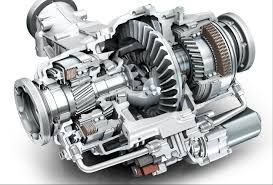


A proper mechanical limited slip differential (LSD) is considered almost essential for drifting. Attempting to drift with an open or viscous differential in a sustained slide generally yields relatively less impressive results. All other modifications are secondary to the LSD.


The preferred form of LSD for drifting is the clutch type, in "2-way" form, for its consistent and aggressive lockup behavior under all conditions (acceleration and deceleration). Some drift cars use a spool "differential", which actually has no differential action at all - the wheels are locked to each other. Budget-minded drifters may use a welded differential, where the side gears are welded to give the same effect as a spool. This makes it easier to break rear traction because it reduces maximum traction in all situations except traveling in a straight line. Welded differentials have an inherent risk involved: due to the tremendous amounts of internal stress the welds may fail and the differential completely lock up leaving the rear wheels immobilized. Helical torque sensing differentials such as the Torsen or Quaife (available on cars in certain stock trims such as S15, FD3S, MX-5, JZA80, UZZ3x) are also adequate. It is common for drifters to change the final gear ratio depending on the type of track layout.


The clutches on drift cars tend to be very tough ceramic brass button or multiple-plate varieties, for durability, as well as to allow rapid "clutch kick" techniques to upset the balance of the car. Gearbox and engine mounts are often replaced with urethane or aluminum mounts, and dampers added to control the violent motion of the engine and gearbox under these conditions.


Gear sets may be replaced with closer ratios to keep the engine in the power band. These may be coarser dog engagement straight cut gears instead of synchronised helical gears, for durability and faster shifting at the expense of noise and refinement. Wealthier drifters may use sequential gearboxes to make gear selection easier and faster, while sequential shift lever adapters can be used to make shifts easier without increasing shift time.

Steering & suspension


Steering angle modifications are also crucial as the driver progresses. The first stage of this is usually a modified steering knuckle or upright. Extended control arms are employed onMacPherson strut vehicles like the Nissan S-Chassis, as to allow for more clearance for higher steering angles. Companies like Wisefab, Voodoo13, and Parts Shop MAX have developed full lock kits including modification of the vehicles original scrub radius, kingpin axis, Ackermann angle, amount of bump steer, caster angle, and kinematics as to maximize front grip and eliminate mechanical bind at steering angles in excess of 60°. While MacPherson strut vehicles are prevalent in profession drifting, Double wishbone suspension vehicles can also be competitive, with often better caster and camber curves.


Spring rates and dampers (shock absorbers) are tuned also at higher skill levels, depending on track layout.


Typically, dedicated drifting cars are modified to eliminate "Ackermann steering geometry", which is included on almost all production cars. While Ackermann geometry is helpful in making a car turn easier, it inhibits the ability to slide sideways at full lock necessary to compete in drifting.

Cockpit

Because of the large amount of centrifugal force encountered during drifting, drivers find it preferable to be retained firmly by a racing seat and 5-point harness. This allows the hands to merely turn the wheel, instead of bracing the body in the seat. The same applies for the feet, which are free to move rapidly between clutch, brake and accelerator pedals. The steering wheel should be relatively small, dished, and perfectly round, so that it can be released and allowed to spin through the hands as the caster returns the front wheels to center. The locking knob on the hand brake is usually replaced with a spin turn knob; this stops the hand brake locking on when pulled. Nearly all drivers move the hand brake location or add an extra hydraulic hand brake actuator for greater braking force. Additional gauges used to monitor boost levels, oil pressure and temperature, intake andcoolant temperatures, air-fuel ratio (also called λ, or "Lambda" ratio), etc.

Tires

Competitive drifters often run DOT-approved (road legal) tires similar to racing slicks in rubber composition, but with shallow treads included. This is permitted, with the exception of some major championships including D1GP and Formula Drift which only permits commercially available tires that are approved by the sanctioning body. Professional drifting has come to the point where grip is tuned into cars to be defeated. It makes for a faster drift necessary in the current professional climate. Tires typically used by drifters are around the DOT treadwear rating of 200. Examples include the Hankook Ventus RS-3, Falken Azenis RT615K, Nitto NT05, Yokohama ADVAN Neova AD08R, and Achilles Radial 123s.