Showing posts with label engine. Show all posts

Tuesday, 31 May 2016

THE MAZDA LEGEND FOREVER


True Mazda Legend...


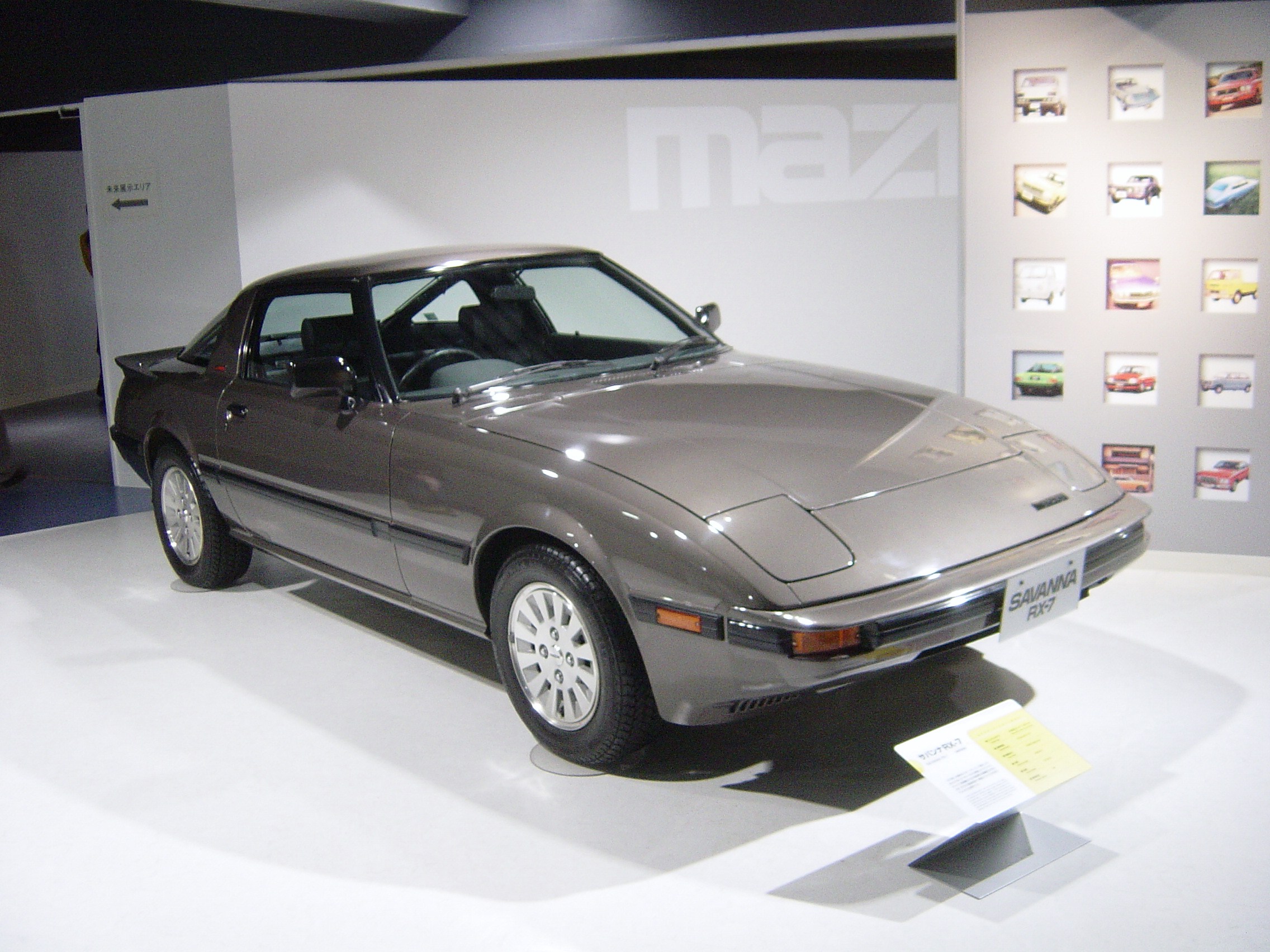
The Mazda RX-7 is a sports car that was produced by the Japanese automaker Mazda from 1978 to 2002. The original RX-7 featured a 1,146 cc (69.9 cu in) twin-rotor Wankel rotary engine and a front-midship, rear-wheel drive layout. The RX-7 replaced the RX-3, with both models sold in Japan as the Mazda Savanna.
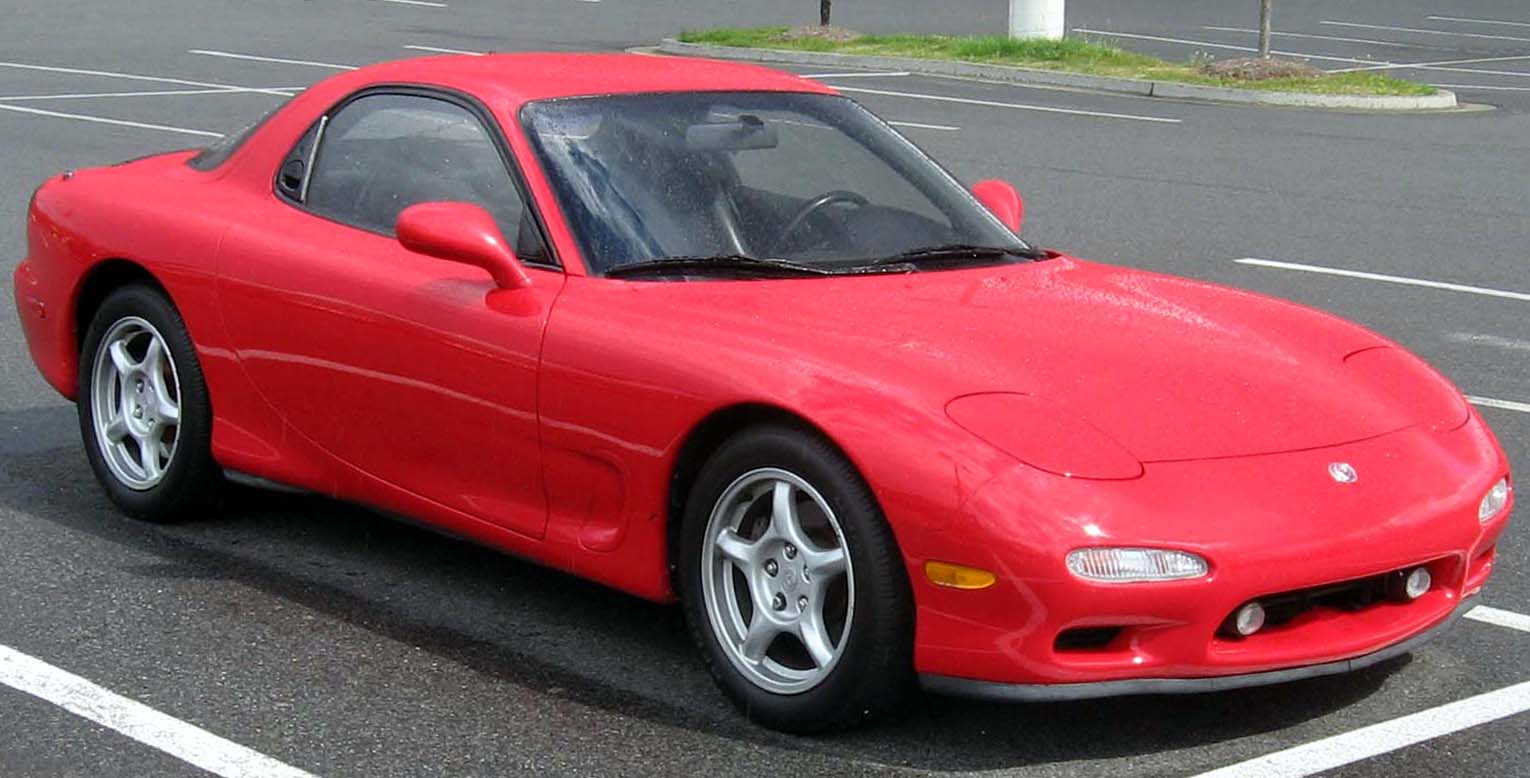
The original RX-7 was a sports car with pop-up headlamps. The compact and lightweight Wankel rotary engine is situated slightly behind the front axle, a configuration marketed by Mazda as "front mid-engine". It was offered as a two-seat coupé, with optional "occasional" rear seats in Japan, Australia, the United States, and other parts of the world. The rear seats were initially marketed as a dealer-installed option for the North American markets.
The RX-7 made Car and Driver magazine's Ten Best list five times. 811,634 RX-7s were produced.
The RX-7 has become notable through pop culture such as The Fast and the Furious series, Initial D, Need for Speed, Wangan Midnight,Forza Motorsport and Gran Turismo.
Racing versions of the first-generation RX-7 were entered at the prestigious 24 hours of Le Mans endurance race. The first outing for the car, equipped with a 13B engine, failed by less than one second to qualify in 1979. The next year, a 12A-equipped RX-7 not only qualified, it placed 21st overall. That same car did not finish in 1981, along with two more 13B cars. Those two cars were back for 1982, with one 14th-place finish and another DNF. The RX-7 Le Mans effort was replaced by the 717C prototype for 1983. In 1991, Mazda made racing history becoming the first Japaneseautomobile manufacturer to win the 24 hours of Le Mans. The car was a 4-rotor prototype, the 787B. To this day, Mazda is the only Japanese manufacturer to have won the prestigious 24-hour Le Mans race outright. Mazda is also the only manufacturer to win the 24 hours of Le Mans race using something other than a reciprocating piston engine.
Mazda began racing RX-7s in the IMSA GTU series in 1979. In its first year, RX-7s placed first and second at the 24 Hours of Daytona, and claimed the GTU series championship. The car continued winning, claiming the GTU championship seven years in a row. The RX-7 took the GTO championship ten years in a row from 1982. In addition to this, a GTX version was developed, named the Mazda RX-7 GTP; this was unsuccessful, and the GTPversion of the car was also unsuccessful. The RX-7 has won more IMSA races than any other car model. In the USA SCCA competition RX-7s were raced with great success by Don Kearney in the NE Division and John Finger in the SE Division. Pettit Racing won the GT2 Road Racing Championship in 1998. The car was a 93 Mazda RX-7 street car with only bolt-on accessories. At season end Pettit had 140 points—63 points more than the 2nd place team. This same car finished the Daytona Rolex 24-hour race 4 times.
The RX-7 also fared well at the Spa 24 Hours race. Three Savanna/RX-7s were entered in 1981 by Tom Walkinshaw Racing. After hours of battling with several BMW 530i's and Ford Capris, the RX-7 driven by Pierre Dieudonné and Tom Walkinshaw won the event. Mazda had turned the tables on BMW, who had beaten Mazda's Familia Rotary to the podium eleven years earlier at the same event. TWR's prepared RX-7s also won the British Touring Car Championship in 1980 and 1981, driven by Win Percy.
Canadian/Australian touring car driver Allan Moffat was instrumental in bringing Mazda into the Australian touring car scene which ran to Group C regulations unique to Australia. Over a four-year span beginning in 1981, Moffat took the Mazda RX-7 to victory in the 1983 Australian Touring Car Championship, as well as a trio of Bathurst 1000 podiums, in 1981 (3rd with Derek Bell), 1983 (second with Yoshimi Katayama) and 1984 (third with former motorcycle champion Gregg Hansford). In 1983, Peter McLeod drove his RX-7 to win the 1983 Australian Endurance Championship, while Moffat won the Endurance title in 1982 and 1984. Australia's adoption of international Group A regulations, combined with Mazda's reluctance to homologate a Group A RX-7 (meaning that a base number of 5,000 had to be built, plus another 500 "evolution" models), ended Mazda's active participation in Australian touring car racing at the end of the 1984 season.
The RX-7 even made an appearance in the World Rally Championship. The car finished 11th on its debut at the RAC Rally in Wales in 1981. Group B received much of the focus for the first part of the 1980s, but Mazda did manage to place third at the 1985 Acropolis Rally, and when the Group B was folded, its Group A-based replacement, the 323 4WD claimed the victory atSwedish Rally in both 1987 and 1989.

toyota JZ engine


Toyota 1JZ-GTE Engine

1JZ-GTE was introduced in 1990 to be used in Toyota Supra GT, Toyota, Toyota Chaser, Toyota Cresta, and Toyota Mark II models. In 1991 Soarer GT also received 1JZ-GTE engine. The engine was longitudinally mounted in all models because of inline 6 piston configuration. 1JZ-GTE was displacing 2491cc with 86mm bore x 71.5mm stroke. Cast iron block was housing aluminum alloy pistons that had 8.5:1 compression ratio. Aluminium alloy head utilized pent roof combustion chambers and direct fire ignition for increased combustion efficiency. Belt driven dual head cams were running four valves per cylinder. 380cc/min high impedance injectors were used to feed the engine with necessary amount of fuel. 1JZ-GTE’s produced until 1996 were equipped with parallel mounted twin CT12A turbochargers and were breathing through a front-mount air-to-air intercooler. CT12A turbochargers employed ceramic turbine wheels which were prone to delamination, however this problem was solved in later models. Toyota declared that the 1JZ-GTE delivered was 280hp at 6200 RPM and 363Nm of torque at 4800 rpm.


In 1996 1JZ-GTE received major revisions. Both cam shafts were now featuring Toyota’s variable valve timing mechanism, VVT-i. Water jackets were modified for improved cylinder cooling and cam friction was reduced with titanium nitride coating. Twin CT12A turbochargers were replaced by a single CT15B unit. To suit the new turbocharger, exhaust manifold and head design were also revised. These improvements did not increase the power output of since 1jz-GTE was already putting out 280hp -which was the limit according to a gentleman’s agreement among Japanese automobile manufacturers- however the torque was increased to 379Nm at 2400rpm. Engine efficiency was also affected from these changes. Reworked 1JZ-GTE was consuming 10% less fuel compared to earlier version.

Toyota placed updated 1JZ-GTE engine in Chaser, Mark II, Cresta, Verossa Crown Athlete V, and Soarer models. The production of 1JZ-GTE ceased in 2007.

Toyota 1JZ engine specs

ManufacturerTahara Plant
Also calledToyota 1JZ
Production1990-2007
Cylinder block alloyCast-iron
ConfigurationStraight-6
ValvetrainDOHC
4 valves per cylinder
Piston stroke, mm (inch)71.5 (2.81)
Cylinder bore, mm (inch)86 (3.39)
Compression ratio8.5
9
10
10.5
11
Displacement2492 cc (152.1 cu in)
Power output125 kW (170 HP) at 6,000 rpm
147 kW (200 HP) at 6,000 rpm
205 kW (280 HP) at 6,200 rpm
Torque output235 Nm (173 lb·ft) at 4,800 rpm
251 Nm (185 lb·ft) at 4,000 rpm
363 Nm (268 lb·ft) at 4,800 rpm
379 Nm (280 lb·ft) at 2,400 rpm
Redline7,000 (VVTi)
7,500
HP per liter68.2
80.3
112.4
112.4
Fuel typeGasoline
Weight, kg (lbs)207 (455)
Fuel consumption, L/100 km (mpg)
-City

-Highway
-Combined
for Supra Mk 3
15.0 (15)
9.8 (24)

12.5 (18)
Turbocharger Naturally aspirated
2x Toyota CT12A
1x Toyota CT15B
Oil consumption , L/1000 km
(qt. per miles)
up to 1.0
(1 qt. per 750 miles)
Recommended engine oil0W-30
5W-20
5W-30
10W-30
Engine oil capacity, L (qt.)4.8 (5.1)
Oil change interval, km (miles)5,000-10,000
(3,000-6,000)
Normal engine operating temperature, °C (F)~90 (195)
Engine lifespan, km (miles)
-Official information
-Real


400,000+ (250,000)
Tuning, HP
-Max HP
-No life span loss

1000+

~400
The engine is installed inToyota Crown
Toyota Mark II
Toyota Supra
Toyota Brevis
Toyota Chaser
Toyota Cresta
Toyota Mark II Blit
Toyota Progres
Toyota Soarer
Toyota  Tourer V
Toyota Verossa


Toyota 2JZ-GTE Engine

The most powerfull version of all JZ series, 2JZ GTE is best known for powering MK IV Toyota Supra. However originally it was built to homologate Toyota Aristo for the Japanese Grand Touring Car Championship (JGTC). 2JZ-GTE was based on the non-turbo inline-6 engine, 2JZ-GE. Same cast iron block and connecting rods were used, but 2JZ-GTE was updated with forged pistons that have 8.5:1 compression, a forged crankshaft , oil spray bars to increase cooling abilities of the pistons and most importantly sequential twin turbos. DOHC Aluminum alloy head was completely redesigned with bigger inlet and outlet ports, bigger valves, wilder cams. For better combustion efficiency at higher engine speeds, distributor was replaced with coil over plugs.

The sequential structure of the 2JZ-GTE’s twin turbos had great effect on the engine response. Traditional parallel structured twin turbos do nothing to compensate the lag created by adding not one but two turbos onto a naturally aspirated power plant. By running sequential turbos, 2JZ-GTE could produce power earlier and with more linearity than a similar parallel structure. As power increases from idle all the exhaust gases flow through the turbine of the first turbo. This creates enhanced power by as early as 1800 RPM and greatly reduces turbo lag. As engine speed increases towards 4000 RPM some exhaust begins to split from the first turbo towards the turbine of the second turbo. At this stage the second turbo enters a ‘pre-spool’ stage as it the blades begin to spin but do not add any additional power. When engine speed hits 4500 RPM exhaust begins to fully divide into an even flow between the two turbos as they both approach full spool.

With sequential twin turbos and an intercooler JDM spec 2JZ-GTE was easily reaching 280hp. North American and European spec engines were equipped with bigger injectors and different turbos. These changes enabled the engine to deliver an output of 320hp. The differences between two versions are as follows.

JDM
CT12B turbos with ceramic blades
440 cc/min fuel injectors
Camshaft construction

North American & European
CT20A turbos with stainless steel blades
550 cc/min fuel injectors
Camshaft construction

Toyota's variable valve timing, VVT-i was introduced in 1997. Introduction of VVT-i did not have any effect on power output, but the engine efficiency was improved. Production of 2JZ-GTE ended in 2001 along with MK IV Toyota Supra.

2JZ-GTE is famous for its power potential. Both the crankshaft and connecting rods come forged from the factory. With forged internals and a robust cast iron block 2JZ-GTE engine is capable of outputs over 400hp with stock internals.

Toyota 2JZ engine specs

ManufacturerTahara Plant
Also calledToyota 2JZ
Production1991-2007
Cylinder block alloyCast-iron
ConfigurationStraight-6
ValvetrainDOHC
4 valves per cylinder
Piston stroke, mm (inch)86 (3.39)
Cylinder bore, mm (inch)86 (3.39)
Compression ratio8.5
10.5
11.3
Displacement2997 cc (182.9 cu in)
Power output162 kW (220 HP) at 5,600 rpm
162 kW (220 HP) at 5,800 rpm
164 kW (223 HP) at 5,800 rpm
169 kW (230 HP) at 6,000 rpm
206 kW (280 HP) at 5,600 rpm
239 kW (325 HP) at 5,600 rpm
Torque output,294 Nm (216 lb·ft) at 3,600 rpm
280 Nm (206 lb·ft) at 4,800 rpm
304 Nm (224 lb·ft) at 4,000 rpm
435 Nm (321 lb·ft) at 4,000 rpm
440 Nm (324 lb·ft) at 4,800 rpm
Redline6,800
7,200 VVTi
HP per liter73.4
73.4
74.4
76.7
93.4
108.4
Fuel typeGasoline
Weight, kg (lbs)230 (507)
Fuel consumption, L/100 km (mpg)
-City

-Highway
-Combined
for Supra Mk 4
18.0 (13)
10.0 (23)

12.5 (18)
Turbocharger Naturally aspirated
2x Toyota CT20A
2x Toyota CT12B
Oil consumption , L/1000 km
(qt. per miles)
up to 1.0
(1 qt. per 750 miles)
Recommended engine oil0W-30
5W-20
5W-30
10W-30
Engine oil capacity, L (qt.)5.5 (5.8)
Oil change interval, km (miles)5,000-10,000
(3,000-6,000)
Normal engine operating temperature, °C (F)~90 (195)
Engine lifespan, km (miles)
-Official information
-Real


400,000+ (250,000)
Tuning, HP
-Max HP
-No life span loss

1500+

400-500
The engine is installed inToyota Crown
Toyota Mark II
Toyota Supra
Toyota Altezza RS300
Toyota Aristo
Toyota Brevis
Toyota Chaser
Toyota Cresta
Toyota Progres
Toyota Soarer
Lexus IS300
Lexus GS300
Lexus SC 300