As a motorsport discipline, professional drifting competitions are held worldwide and are judged according to the speed, angle, showmanship and line taken through a corner or set of corners.
History
Origin
Although the origin of drifting is not known, Japan was one of the earliest birthplaces of drifting. It was most popular in the All Japan Touring Car Championship races. Motorcycling legend turned driver, Kunimitsu Takahashi, was the foremost creator of drifting techniques in the 1970s. This earned him several championships and a legion of fans who enjoyed the spectacle of smoking tires. The bias ply racing tires of the 1960s-1980s lent themselves to driving styles with a high slip angle. As professional racers in Japan drove this way, so did the street racers.
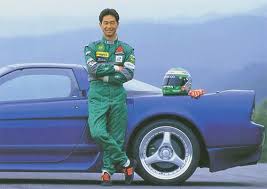
Keiichi Tsuchiya, known as the "Drift King" (ドリキン Dorikin?), became particularly interested by Takahashi's drift techniques. Tsuchiya began practicing his drifting skills on the mountain roads of Japan, and quickly gained a reputation amongst the racing crowd. In 1987, several popular car magazines and tuning garages agreed to produce a video of Tsuchiya's drifting skills. The video, known as Pluspy,[2] became a hit and inspired many of the professional drifting drivers on the circuits today. In 1988, alongside Option magazine founder and chief editor Daijiro Inada, he would help to organize one of the first events specifically for drifting called the D1 Grand Prix. He also drifted every turn in Tsukuba Circuit in Japan.
Popularity
One of the earliest recorded drift events outside Japan was in 1996, held at Willow Springs Raceway in Willow Springs, California hosted by the Japanese drifting magazine and organizationOption. Inada, founder of the D1 Grand Prix in Japan, the NHRA Funny Car drag racer Kenji Okazaki and Keiichi Tsuchiya, who also gave demonstrations in a Nissan 180SX that the magazine brought over from Japan, judged the event with Rhys Millen and Bryan Norris being two of the entrants.[3] Drifting has then since exploded into a massively popular form of motorsport in North America, Australia, Asia and Europe.

Drifting has evolved into a competitive sport where drivers compete almost exclusively in rear-wheel-drive cars, to earn points from judges based on various factors. At the top levels of competition, the D1 Grand Prix in Japan pioneered the sport. Others such as Formula D in the United States, DRIFT ALLSTARS King of Europe and the British Drift Championship in Europe,WDS in China, Formula Drift Asia in the Malaysia/Singapore/Thailand/Indonesia, NZ Drift Series in New Zealand, Australian Drifting Grand Prix and Greek Drift Championship (Drift Wars) have come along to further expand it into a legitimate motor sport worldwide. The drivers within these series were originally influenced by the pioneers from D1 Japan and are able to keep their cars sliding for extended periods of time, often linking several turns.
Drift competition
Drifting competitions are judged based on line, angle, speed and show factor. Line involves taking the correct line, which is usually announced beforehand by judges. The show factor is based on multiple things, such as the amount of smoke, how close the car is to the wall or designated clipping point, and the crowd's reaction. Angle is the angle of a car and more importantly the turned wheels in a drift, speed is the speed entering a turn, the speed through a turn, and the speed exiting the turn; faster is better.

The judging takes place on just a small part of the circuit, a few linking corners that provide good viewing, and opportunities for drifting. The rest of the circuit is irrelevant, except as it pertains to controlling the temperature of the tires and setting the car up for the first judged corner. In the tandempasses, the lead driver often feints his or her entry to the first corner to upset the chase driver, however in some European series, this practice is frowned upon by judges and considered foul play, resulting in deduction of points.
There are typically two sessions, a qualifying/practice session, and a final session. In the qualifying sessions, referred as Tansō (単走:solo run), drifters get individual passes in front of judges (who may or may not be the final judges) to try to make the final 16. This is often on the day preceding the final.
The finals are tandem passes, referred as Tsuisō (追走:chasing race). Drivers are paired off, and each heat comprises two passes, with each driver taking a turn to lead. The best of the 8 heats go to the next 4, to the next 2, to the final. The passes are judged as explained above, however there are some provisos such as:
-Overtaking the lead car under drift conditions is ok if you don't interrupt the lead car's drift.
-Overtaking the lead car under grip conditions automatically forfeits that pass.
-Spinning forfeits that pass, unless the other driver also spins.
-Increasing the lead under drift conditions helps to win that pass.
-Maintaining a close gap while chasing under drift conditions helps to win that pass.
Points are awarded for each pass, and usually one driver prevails. Sometimes the judges cannot agree, or cannot decide, or a crowd vocally disagrees with the judge's decision.In such cases more passes may be run until a winner is produced. Sometimes mechanical failure determines the battle's outcome, either during or preceding a heat. If a car cannot enter a tandem battle, the remaining entrant (who automatically advances) will give a solo demonstration pass. In the event of apparently close or tied runs, crowds often demonstrate their desire for another run with chants of 'one more time'.

There is some regional variation. For example in Australia, the chase car is judged on how accurately it emulates the drift of the lead car, as opposed to being judged on its own merit, this is only taken into consideration by the judges if the lead car is on the appropriate racing line. Other variations of the tansou/tsuiso and the tansou only method is the multi-car group judging, seen in the Drift Tengoku videos where the four car team is judged in groups.
Usually, drift cars are light to moderate weight rear-wheel-drive, all-wheel-drive coupes and sedans and some front wheel drive offer a large range of power levels. There have also been AWD rally cars that have been converted to RWD.
Despite the export of Japanese Domestic Market (JDM) vehicles to continents outside Japan, drifters in other countries prefer to use local examples as drift cars.
A high volume of JDM imports were brought to countries such as Australia, however it is not unusual to see Australian domestic vehicles such as theHolden Commodore or Ford Falcon utilised in drifting competitions.
The American market enjoyed a relatively high volume of JDM cars being imported over the last decade, despite Japanese domestic vehicles being right-hand-drive only. Locally sold imports such as the Lexus SC and Nissan 240SX feature heavily in American drifting, however they are usually modified with JDM engine transplants to mirror their Japanese domestic equivalents (usually with a Toyota 1JZ-GTE/2JZ-GTE or Nissan CA18DET/SR20DET respectively).
In the UK, there are a high level of Japanese imports used within the drifting scene, due in part to the UK sharing a right hand drive layout with Japan. However these cars often command stronger premiums over UK market cars, partly due to import costs. There are plenty of UK and European models used as drift cars as well, older BMW's are particularly prominent due to cost and availability, with Volvo 300 series and Ford Sierras also proving popular.
Drift tuning
Drivetrain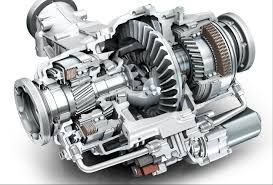
A proper mechanical limited slip differential (LSD) is considered almost essential for drifting. Attempting to drift with an open or viscous differential in a sustained slide generally yields relatively less impressive results. All other modifications are secondary to the LSD.
The preferred form of LSD for drifting is the clutch type, in "2-way" form, for its consistent and aggressive lockup behavior under all conditions (acceleration and deceleration). Some drift cars use a spool "differential", which actually has no differential action at all - the wheels are locked to each other. Budget-minded drifters may use a welded differential, where the side gears are welded to give the same effect as a spool. This makes it easier to break rear traction because it reduces maximum traction in all situations except traveling in a straight line. Welded differentials have an inherent risk involved: due to the tremendous amounts of internal stress the welds may fail and the differential completely lock up leaving the rear wheels immobilized. Helical torque sensing differentials such as the Torsen or Quaife (available on cars in certain stock trims such as S15, FD3S, MX-5, JZA80, UZZ3x) are also adequate. It is common for drifters to change the final gear ratio depending on the type of track layout.
The clutches on drift cars tend to be very tough ceramic brass button or multiple-plate varieties, for durability, as well as to allow rapid "clutch kick" techniques to upset the balance of the car. Gearbox and engine mounts are often replaced with urethane or aluminum mounts, and dampers added to control the violent motion of the engine and gearbox under these conditions.
Gear sets may be replaced with closer ratios to keep the engine in the power band. These may be coarser dog engagement straight cut gears instead of synchronised helical gears, for durability and faster shifting at the expense of noise and refinement. Wealthier drifters may use sequential gearboxes to make gear selection easier and faster, while sequential shift lever adapters can be used to make shifts easier without increasing shift time.
Steering & suspension
Steering angle modifications are also crucial as the driver progresses. The first stage of this is usually a modified steering knuckle or upright. Extended control arms are employed onMacPherson strut vehicles like the Nissan S-Chassis, as to allow for more clearance for higher steering angles. Companies like Wisefab, Voodoo13, and Parts Shop MAX have developed full lock kits including modification of the vehicles original scrub radius, kingpin axis, Ackermann angle, amount of bump steer, caster angle, and kinematics as to maximize front grip and eliminate mechanical bind at steering angles in excess of 60°. While MacPherson strut vehicles are prevalent in profession drifting, Double wishbone suspension vehicles can also be competitive, with often better caster and camber curves.
Spring rates and dampers (shock absorbers) are tuned also at higher skill levels, depending on track layout.
Typically, dedicated drifting cars are modified to eliminate "Ackermann steering geometry", which is included on almost all production cars. While Ackermann geometry is helpful in making a car turn easier, it inhibits the ability to slide sideways at full lock necessary to compete in drifting.
Cockpit
Because of the large amount of centrifugal force encountered during drifting, drivers find it preferable to be retained firmly by a racing seat and 5-point harness. This allows the hands to merely turn the wheel, instead of bracing the body in the seat. The same applies for the feet, which are free to move rapidly between clutch, brake and accelerator pedals. The steering wheel should be relatively small, dished, and perfectly round, so that it can be released and allowed to spin through the hands as the caster returns the front wheels to center. The locking knob on the hand brake is usually replaced with a spin turn knob; this stops the hand brake locking on when pulled. Nearly all drivers move the hand brake location or add an extra hydraulic hand brake actuator for greater braking force. Additional gauges used to monitor boost levels, oil pressure and temperature, intake andcoolant temperatures, air-fuel ratio (also called λ, or "Lambda" ratio), etc.
Tires
Competitive drifters often run DOT-approved (road legal) tires similar to racing slicks in rubber composition, but with shallow treads included. This is permitted, with the exception of some major championships including D1GP and Formula Drift which only permits commercially available tires that are approved by the sanctioning body. Professional drifting has come to the point where grip is tuned into cars to be defeated. It makes for a faster drift necessary in the current professional climate. Tires typically used by drifters are around the DOT treadwear rating of 200. Examples include the Hankook Ventus RS-3, Falken Azenis RT615K, Nitto NT05, Yokohama ADVAN Neova AD08R, and Achilles Radial 123s.


