Showing posts with label awd. Show all posts

Wednesday, 4 May 2016

Nissan Skyline GT-R 5th Gen

Nissan Skyline GT-R

Fifth generation (1999–2002)
The GF-BNR34 (R34) Skyline GT-R and GT-R V·spec models were released in January 1999. The R34 GT-R was also shorter (from front to rear), and the front overhang reduced. The valve covers were painted glossy red (color code Cherry Red Effect Z24 or X1020), as opposed to black in previous models.
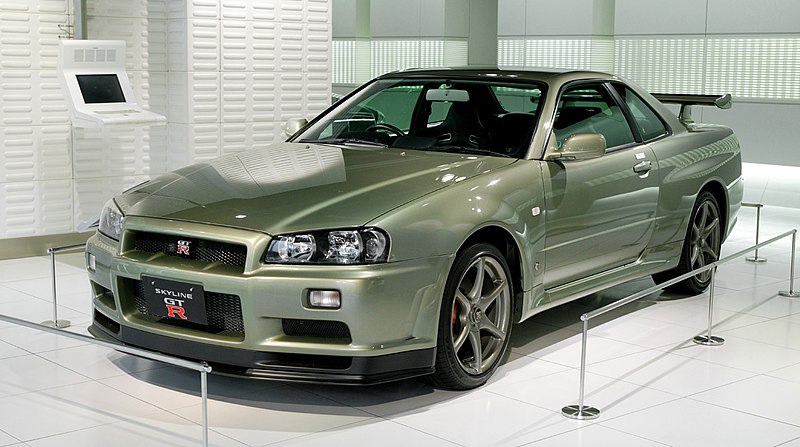

A new feature on the R34 GT-R is a 5.8" LCD multifunction display on the center of the dashboard, which shows seven different live readings of engine and vehicle statistics such as turbocharger pressure (1.2 bar max), oil and water temperature, among others. The GT-R V·spec model added two extra features to the display: intake and exhaust gas temperatures. Nismo Multi-function Displays (MFD) can be bought at an extra cost, they include a lap timer, G-Force meter and an increase in boost pressure measurement to 2 bar. The R34 GT-R was made shorter in response to customer concerns who thought the R33 was too bulky.

Like the R33, the new R34 GT-R V·spec (Victory Specification) models come equipped with theATTESA E-TS Pro system and an Active LSD at the rear, while standard GT-R models come with the non-Pro system and a conventional mechanical differential. The V.spec model also had firmer suspension and lower ground clearance, thanks to front and side splitters, as well as a rear carbon fiber air diffuser, designed to keep air flowing smoothly under the car.

Another special model of the R34 GT-R is the M·spec. It was similar to the V.spec, but had special "Ripple control" dampers, revised suspension set up, stiffer rear sway bar and a leather interior with heated front seats. The 'M' on the M·Spec stood for Mizuno who is the chief engineer of Nissan.

At the time of the R34's release, like the R32 and R33, Nissan released an R34 N1 model. The R34 GT-R N1 was equipped similar to the R32 and R33 N1 models – a homologation special. It was sold without air conditioning, audio equipment, rear wiper, or trunk lining, but ABS remained. The new R34 N1 was also given the new R34 N1 engine. Only 45 R34 V.spec N1 models were produced from the factory, 12 of which Nismo used for Super Taikyu racing. The rest were sold to various customers, mostly racing teams and tuning garages.

The V·spec version was also imported into the UK with a number of modifications carried out on the car. These included 3 additional oil coolers, revised ECU map, full Connolly leather interior, underbody diffusers, stiffer suspension, active rear limited slip differential, extra display feature on the in car display.


In October 2000, Nissan released the V·spec II, replacing the V·spec. The V·spec II has increased stiffness in the suspension (even stiffer than the original V·spec) and had larger rear brake rotors. It also comes equipped with a carbon fiber hood equipped with a NACA duct, which is lighter than the aluminum that all other GT-R hoods are made from. Also different on the V·spec II was an iridium center console and aluminum pedals. The seats were upholstered with black cloth rather than the gray cloth used on previous R34 GT-R models, and the amber turn lenses were replaced with white versions. With the exception of the carbon fiber bonnet, the standard trim level GT-R also received these updates.

In February 2002 Nissan released a final production model of the R34 GT-R called the Skyline GT-R V·spec II Nür[26] and the Skyline GT-R M·spec Nür. The Nür was named after the famous German Nürburgringracetrack, where the Skyline was developed. In total 1000 R34 GT-R Nür(s) were made, 750 were V·spec II Nürs' and 250 were M·Spec Nürs'. The Nür model featured an improved RB26DETT based on the N1 racing engine. The standard turbochargers were upgraded to larger versions with a slight increase in boost and the ceramic blades were replaced with steel versions. This has increased lag, but to compensate the turbo's durability was improved while being able to handle a bigger boost increase. This allowed tuners to increase the boost safely with standard turbos up to 340 kW (450 hp) at the crank. The V.spec II Nür is based on the regular V·spec II model, and the M·spec Nür was based on the regular M·spec model. Other than the addition of the Nür engine, the Nür models also included a different color of stitching on the interior trim, as well as a speedometer reading up to 300 km/h (186 mph), and gold valve covers instead of red. Due to Japanese car industry norms at the time, the car was advertised as having 206 kW (276 hp) but it actually had over 246 kW (330 hp) when it left the factory.
Standard Cars = 3,965
V·Spec = 1,308
V·Spec UK = 80
V·Spec N1 = 45
V·Spec II = 5,512
V·Spec II Nür = 750[26]
V·Spec II N1 = 18
M·Spec = 228[27]
M·Spec Nür = 250
V-Spec II NISMO Z-tune 2 = 19
Total = 12,175

Z-Tune
Nismo originally designed the concept of the Z-tune in 2002 when Nissan was putting an end to the R34 Skyline production. The first Z-tune was built in 2003, using a used 2002 Skyline GT-R V·spec II. It was built with a concept RB26DETT 'Z1' engine. This engine was based on Nissan's Le Mans GT2 and GT500 racing experiences. As with the racing vehicles a strengthened engine block and stroked crankshaft were utilized. The engine was also bored. With the new displacement of 2.8 L and upgraded turbo-chargers the Z1 produced 370 kW (500 hp). The Z-Tune had a 0–100 km/h (0–60 mph) time in 3.8 seconds and has a top speed of over 203 mph.

Nismo was then given the approval from Nissan to build Z-tune models for the Nismo anniversary. Nismo then purchased 20 used R34 GT-R V·spec, each with less than 18,000 miles (29,000 km) on the clock, they were then completely stripped and were resprayed to a "Z-tune Silver," a special color exclusively for the Z-tune.[28] For each of the 20 production models, the 2.8 L engine was revised to allow it to reach 8000 rpm. The turbochargers were supplied by IHI in Japan. The engine is advertised as making as much as 370 kW (500 hp) (for warranty reasons). This second revision of the Z-tune engine is called the 'Z2'. The bodywork is designed with the same functional components used in Nismo's GT500 racing cars, such as engine bay vents on the hood and fenders, as well as wider fenders for wider wheels. The Z-tune is also improved with an aggressive suspension setup from Sachs, and a specially designed Brembohand brake system.

The entire car is essentially handmade, with the car being completely stripped and re-built from the chassis up. Engineers reinforced and stiffened the chassis seam welding in key areas such as the door seams and door frames and added carbon fiber to the strut towers and transmission tunnel and the engine bay, completely redesigning the suspension, drivetrain, engine, gearbox and other components so as to work at maximum efficiency and reliability as is expected of a road-going vehicle. Although Nismo planned on building 20 cars, they ceased production on only 19 (including 2 prototypes).[29] The Z-tune is often regarded as the most expensive (prices for some have been known to exceed US$290,000) street legal GT-R ever built.


Replacement


Following the end of R34 production in 2002, Nissan announced they would separate the GT-R model from the Skyline name, creating an entirely new vehicle—though based on the same platform as the Skyline. This new car, now known simply as the Nissan GT-R, debuted in 2007 in Tokyo. Released to consumers in 2008, it was the first GT-R available worldwide, entering the North American market for the first time.

Though based on the FM platform used by the V36 generation Skyline,the GT-R uses an evolved Premium Midship (PM) platform. The car retains its heritage by using the chassis code DBA-R35, or simply R35.

Powertrain

The GT-R of the 1990s included a 2.6 L straight six-cylinder twin-turbo engine producing 206 kW (276 hp). The stock turbo-chargers were of a hybrid steel/ceramic design allowing them to spool up faster due to the light nature of the ceramic exhaust wheel.

The drive train delivered power to all four wheels using an electronically controlled all-wheel-drive system Nissan called the ATTESA E-TS. The ATTESA E-TS system used two accelerometers mounted under the center console, which fed lateral and longitudinal inputs to the ECU. The ECU then controlled power delivery to the front wheels via an electronic torque split converter. In 1995, the ATTESA E-TS Pro was introduced as an option for R33 GT-R customers, and came as standard equipment in GT-R V.spec models. It was later standard equipment in all GT-R models for the R34 Skyline GT-R. The ATTESA E-TS Pro added an Active Limited Slip Differential, which was controlled by the onboard ATTESA computer. This was only for the rear differential, as the front differential remained as a normal Limited Slip Differential. The ATTESA E-TS Pro was also advertised in brochures as adding an electronically controlled 4-channel ABS brake system. Although it is not related to the all wheel drive system, it uses much of the same sensors, and the same computer. The R32 could be switched from AWD to RWD by removing the 4WD fuse, but R33 and R34 models had to have the front tailshaft removed, or the centre diff can be depressurised for 'towing mode' as specified in the owners manual.

The car also had computer-controlled all wheel steering system referred to as HICAS. The HICAS system activated when the vehicle exceeded 80 km/h (50 mph) and controlled the steering of the rear wheels in the same direction as the front to improve turn in on entry to corners. It should be noted however that this feature is often seen as more of a hindrance than help in race applications. The system tends to favor less advanced drivers, and can make the rear suspension unstable during high speed cornering. For this reason many kits are available to override this system. These kits usually loop the hydraulic lines back on themselves on the R32. Kits for the R33/34 models use a simple lock out bar—or a Tomei kit, which also alters the electrical control system ( the 33 and 34 had electronic HICAS). These modifications strive to make the car more predictable when driving at the limit of traction.

While the published figures from Nissan were as quoted above, tests showed the car had a factory power output of closer to 330 PS (243 kW; 325 hp) at the flywheel. The lower published figure was Nissan's response to the need to abide by a gentleman's agreement between the Japanese auto manufacturers not to release a car to the public exceeding 280 PS (206 kW; 276 hp) of power output.
N1 engines

RB26DETT N1 is an upgraded version of the standard RB26DETT engine. It was developed by Nissan Kohki's REINIK division for NISMO and N1 race cars. The standard RB26DETT, although known for its durability, proved to require too much maintenance for Group N (N1 class) racing conditions. REINIK started with strengthened RB26DETT block. N1 block is identified by its 24U number stamped on the block (05U standard blocks). The cylinder walls are thicker and water cooling channels are enhanced to increase flow. It also received an upgraded oil pump and water pump, to improve the cooling and lubrication for race conditions. The pistons have 1.2 mm (0.047 in) top rings and were balanced before assembly but otherwise very close to standard. The connecting rods are also similar to standard but made from slightly stronger material and balanced. Standard crankshaft is balanced to a higher level. Higher flow exhaust manifolds and turbochargers were added for increased torque and slightly higher top-end power. Turbine wheels on the N1 turbochargers are also made from steel for durability, rather than the lighter but weaker ceramic found on the standard turbine.

The R32 Skyline GT-R N1 street car marked the N1 engine's introduction to the consumer. R32, 33, and 34 N1 street cars were known for lack of amenities and their light weight. The R33 N1 engine and turbochargers were slightly revised, and the R34 N1 engine saw further improvement. The camshaft timing was altered slightly for more torque. R33 and R34 N1 turbochargers are the same size however R34 N1s use a ball bearing center section. NISMO states the ball bearings in the R34 N1 allow them to spool 400rpm faster than R33 N1.

The final N1 engine is the R34 Nür engine. The only differences are the cam cover color change from red to gold and R34 Nür edition was a fully loaded street car. There were 1000 Nür engines made for use in the R34 V.spec II Nür and R34 M-spec Nür models.
Nissan Skyline GT-R 4th Gen


Nissan Skyline GT-R

Fourth generation (1995–1998)
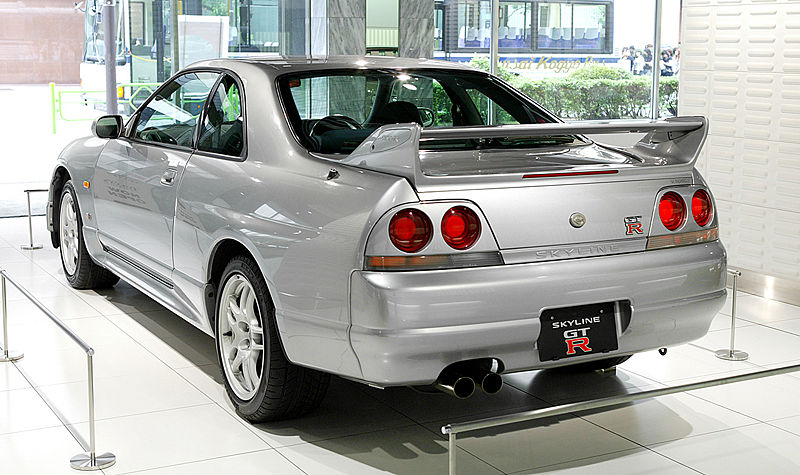
The E-BCNR33 (R33) was developed in 1995 as a successor to the R32 model. The engine in the R33 was nearly identical to the R32. It used the same turbochargers and the same specification for themanual gearbox, although the syncros were stronger. The engine corrected the R32's weak oil pump drive collar, which tended to fail in higher power applications, by using a wider collar. The base model R33 GT-R weighs 1,540 kg (3,400 lb).


The R33 GT-R launched in January 1995 with the base model GT-R and the V.spec model. The V.spec model weighed in 10 kg (22 lb) heavier, and had sportier suspension resulting in lower ground clearance. The V.spec also featured the newer ATTESA E-TS Pro all wheel drive system, which included an Active Limited Slip differential. The V.spec model also included a four-wheel independent channel anti-lock braking system.

At the same time as the release of the R33 GT-R and GT-R V.spec, Nissan released the R33 GT-R V.spec N1 model. Changes made in the R33 N1 are similar to those in the R32 N1. The car was made lighter by removing the ABS, air conditioning, sound system, rear wiper, and trunk carpet. The R33 GT-R V.spec N1 received the slightly revised R33 N1 engine.

The R33 ended production on 9 November 1998. The last one that rolled off the line came in a R34 color, as it shared the same color code.


1996 NISMO - LM Limited

There were several limited editions of the BCNR33 produced by NISMO - Nissan's Motorsport division. The first, the LM version, was released in May 1996 to celebrate Nissan's participation in the 24-hours of Le Mans. The only body colour available for the R33 LM was Champion Blue. The car had a hood-splitter lip to direct air to the upper front aperture, and a carbon-fibre rear wing with Gurney flap. There were carbon-fibre inserts on the rear wing fins with a GT-R badge on the inserts. The "GT-R Skyline" logo under the checkered flag was placed on the C-pillars. Most of the LM's were based on the standard model but a few were based on the V-Spec. Nissan released just 98 of this model to the Japanese market and only 14 of these were V-Spec's. Nissan entered two R33 GT-R cars in the 1995 Le Mans 24 hour race where the number 22 car finished tenth overall. This was remarkable considering it was essentially running the same RB26 motor and going up against supercars of that era like the mighty Mclaren F1 GTR.Limited Edition Factory fitted extras

Championship Blue (code BT2).
Carbon Fibre Rear Wing Blade.
N1 Front Brake Cooling Ducts.
N1 Bonnet Lip.
Commemorative GT-R Decals on C-Pillars.
1997 NISMO 400R[edit]
For other uses, see 400R 

A special edition R33 was released on November 3, 1997 called the 400R, with R standing for Racing. Overall development and planning was by NISMO (Nissan Motorsports International). But, its bored and stroked RB26DETT engine, the RBX-GT2, was engineered and produced by REINIK (later renamed REIMAX – "REINIK to the MAX"). The engine featured 77.7 mm stroke crankshaft (73.7 mm stock), forged 87 mm pistons (86 mm cast stock), upgraded rods, polished ports, high lift camshafts, upgraded oil system, larger exhaust manifolds and higher output turbochargers. NISMO produced an upgraded exhaust, a twin-plate clutch, and intercooler system. Nismo brake pads were fitted to the car. 400R exclusive aerodynamic updates were also added, such as wider fenders, side skirts, a new rear bumper, a new front bumper with bigger air scoops, and a redesigned bonnet and rear spoiler made of carbon fiber. The 400R was also fitted with 18x10 Nismo LM-GT1s. The car developed 300 kW (400 hp) and 347 lb·ft (470 N·m), which allowed a top speed of over 186 mph (300 km/h), and enabled it to reach 0–97 km/h in 4.0 seconds. 370 kW (500 hp) is easily achieved with a higher boost setting. NISMO had originally planned to produce 100 units of the 400R, however only 44 units were made before production of the R33 ended in 1998.
Production figures

Japanese market chassis numbers 000094 and 000100 were never used by Nissan for unknown reasons.

Standard Japanese market Skyline GT-R cars = 9,871
V-Spec Japanese market Skyline GT-R cars = 6,551
V-Spec UK market Skyline GT-R cars = 100 (These have a unique seventeen digit UK Chassis Number and were all sold exclusively by Middlehurst Nissan)
Total Skyline GT-R's Worldwide = 16,520

(Figures include N1 and LM Limited Versions)

Powertrain

The GT-R of the 1990s included a 2.6 L straight six-cylinder twin-turbo engine producing 206 kW (276 hp). The stock turbo-chargers were of a hybrid steel/ceramic design allowing them to spool up faster due to the light nature of the ceramic exhaust wheel.

The drive train delivered power to all four wheels using an electronically controlled all-wheel-drive system Nissan called the ATTESA E-TS. The ATTESA E-TS system used two accelerometers mounted under the center console, which fed lateral and longitudinal inputs to the ECU. The ECU then controlled power delivery to the front wheels via an electronic torque split converter. In 1995, the ATTESA E-TS Pro was introduced as an option for R33 GT-R customers, and came as standard equipment in GT-R V.spec models. It was later standard equipment in all GT-R models for the R34 Skyline GT-R. The ATTESA E-TS Pro added an Active Limited Slip Differential, which was controlled by the onboard ATTESA computer. This was only for the rear differential, as the front differential remained as a normal Limited Slip Differential. The ATTESA E-TS Pro was also advertised in brochures as adding an electronically controlled 4-channel ABS brake system. Although it is not related to the all wheel drive system, it uses much of the same sensors, and the same computer. The R32 could be switched from AWD to RWD by removing the 4WD fuse, but R33 and R34 models had to have the front tailshaft removed, or the centre diff can be depressurised for 'towing mode' as specified in the owners manual.

The car also had computer-controlled all wheel steering system referred to as HICAS. The HICAS system activated when the vehicle exceeded 80 km/h (50 mph) and controlled the steering of the rear wheels in the same direction as the front to improve turn in on entry to corners. It should be noted however that this feature is often seen as more of a hindrance than help in race applications. The system tends to favor less advanced drivers, and can make the rear suspension unstable during high speed cornering. For this reason many kits are available to override this system. These kits usually loop the hydraulic lines back on themselves on the R32. Kits for the R33/34 models use a simple lock out bar—or a Tomei kit, which also alters the electrical control system ( the 33 and 34 had electronic HICAS). These modifications strive to make the car more predictable when driving at the limit of traction.

While the published figures from Nissan were as quoted above, tests showed the car had a factory power output of closer to 330 PS (243 kW; 325 hp) at the flywheel. The lower published figure was Nissan's response to the need to abide by a gentleman's agreement between the Japanese auto manufacturers not to release a car to the public exceeding 280 PS (206 kW; 276 hp) of power output.
N1 engines


RB26DETT N1 is an upgraded version of the standard RB26DETT engine. It was developed by Nissan Kohki's REINIK division for NISMO and N1 race cars. The standard RB26DETT, although known for its durability, proved to require too much maintenance for Group N (N1 class) racing conditions. REINIK started with strengthened RB26DETT block. N1 block is identified by its 24U number stamped on the block (05U standard blocks). The cylinder walls are thicker and water cooling channels are enhanced to increase flow. It also received an upgraded oil pump and water pump, to improve the cooling and lubrication for race conditions. The pistons have 1.2 mm (0.047 in) top rings and were balanced before assembly but otherwise very close to standard. The connecting rods are also similar to standard but made from slightly stronger material and balanced. Standard crankshaft is balanced to a higher level. Higher flow exhaust manifolds and turbochargers were added for increased torque and slightly higher top-end power. Turbine wheels on the N1 turbochargers are also made from steel for durability, rather than the lighter but weaker ceramic found on the standard turbine.

The R32 Skyline GT-R N1 street car marked the N1 engine's introduction to the consumer. R32, 33, and 34 N1 street cars were known for lack of amenities and their light weight. The R33 N1 engine and turbochargers were slightly revised, and the R34 N1 engine saw further improvement. The camshaft timing was altered slightly for more torque. R33 and R34 N1 turbochargers are the same size however R34 N1s use a ball bearing center section. NISMO states the ball bearings in the R34 N1 allow them to spool 400rpm faster than R33 N1.

The final N1 engine is the R34 Nür engine. The only differences are the cam cover color change from red to gold and R34 Nür edition was a fully loaded street car. There were 1000 Nür engines made for use in the R34 V.spec II Nür and R34 M-spec Nür models.

Nissan Skyline GT-R 3rd Gen

Nissan Skyline GT-R

Third generation (1989–1994)
Concept

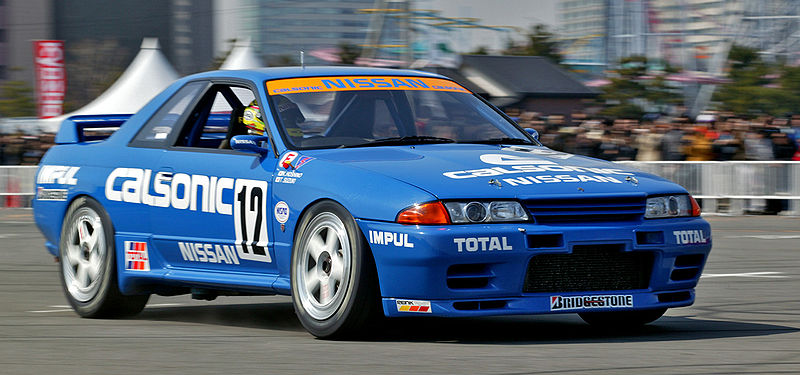
After cancelling the Skyline GT-R in 1973, Nissan revived the GT-R again in 1989. At the time Nissan was competing in Group A Racing with the Skyline GTS-R. Nissan wanted to retire the GTS-R in favor of a more competitive vehicle. The new generation GT-R, E-BNR32 chassis (commonly shortened to R32), was designed to dominate Group A racing.


Nissan Kohki (Nissan's power train engineering and manufacturing facility) originally tested a twin turbocharged 2350cc bored and stroked version of the RB20 engine. This set up produced 233 kW (313 hp) and used a RWD drivetrain. Under Group A regulations, a turbocharged engine must multiply its engine displacement by 1.7, putting the new Skyline in the 4000 cc class, and requiring the use of 10-inch-wide tires. Knowing that they would be required to use 10-inch-wide tires, Nissan decided to make the car all wheel drive. Nissan developed a special motorsport-oriented AWD system for this purpose called the ATTESA E-TS. Although this assisted with traction, it made the car 100 kg (220 lb) heavier; the added weight put the GT-R at a disadvantage to other cars in the 4000 cc class. Nissan then made the decision to increase the displacement to 2600 cc, and put the car in the 4500 cc class, with the car's weight near-equal to competing cars. The 4500 cc class also allowed for 11-inch-wide tires. New engine block and heads were then developed to better match the increased displacement. The result was a 600 horsepower car. Later REINIK (Racing & Rally Engineering Division Incorporated Nissan Kohi) produced Group A racing engines between 373–485 kW (500–650 hp) depending on track conditions.
Production

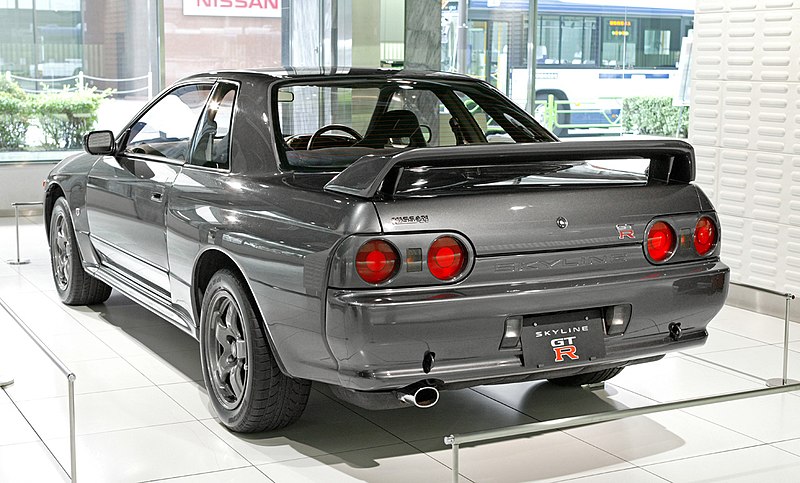
This new 2.6 L all wheel drive concept was put into production as the R32 Nissan Skyline GT-R. The R32 developed 206 kW (276 hp) and 266 lb·ft (361 N·m) of torque, it had a curb weight of 1,430 kg (3,146 lbs). Nissan officially started its production run August 1989, and began its Group A campaign in 1990. Due to strict Group A homologation rules, Nissan was required to also sell a series of the Skyline GT-R that more accurately reflected the car they use in Group A racing. They called this series the Skyline GT-R 'Nismo' edition.

The Skyline GT-R 'Nismo', introduced on 22 February 1990, has a total production of 560 units as required for the "Evolution" models regulation (over 500). Only 500 of the cars were sold to the public, with 60 being held by Nissan to turn into race cars. Its purpose is tohomologate a number of aerodynamic changes used in Group A racing. Changes include additional ducts in the front bumper to improve airflow to the intercooler, a bonnet lip spoiler to direct more air into the engine bay, and an additional boot lip spoiler to provide more downforce. The 'Nismo' GT-R was only available in Gunmetal Grey.


The Skyline GT-R 'N1' model, introduced on July 19, 1991, was designed for home-market N1 racing with a total of 228 units produced. The most notable change was in the engine, which was upgraded to the R32-N1 specification. The car was also lightened by the removal of the ABS, air conditioning, sound system, rear wiper, trunk carpet, and the use of light-weight headlights. No color options were available and all 'N1' cars were delivered with a thin layer of Crystal White paint. The result was a 30 kg weight savings for a curb weight of 1,400 kg.

To celebrate the success of the GT-R in both Group N and Group A racing, Nissan introduced the Skyline GT-R V.spec ("Victory SPECification") car on 3 February 1993. The V.spec added Brembo brakes and a retuned ATTESA E-TS system to the Nismo and N1 packages, as well as 17" BBS wheels with 225/45/17 tires. The V.spec has a list price of ¥5,260,000.

Finally on 14 February 1994 the Skyline GT-R V.spec II was released, with the only change being wider 245/45/17 tires. In addition, both the V.spec and V.spec II had a curb weight of 1,480 kg (3,256 lbs), weighing 50 kg (110 lbs) more than the standard GT-R.Total production of the V.spec I and II was 1,453 and 1,303 units respectively.

Total production of the R32 Skyline GT-R was 43,934 units, with production starting on August 21, 1989. An above average proportion of the GT-R's were sold in white: this is likely because white is the national racing color of Japan in international motorsport.

-Standard Cars = 40,390
-NISMO Group A Evolution = 560
-V.spec = 1,453
-V.spec II = 1,303
-N1 Race Version = 228
-Total = 43,934

Powertrain

The GT-R of the 1990s included a 2.6 L straight six-cylinder twin-turbo engine producing 206 kW (276 hp). The stock turbo-chargers were of a hybrid steel/ceramic design allowing them to spool up faster due to the light nature of the ceramic exhaust wheel.

The drive train delivered power to all four wheels using an electronically controlled all-wheel-drive system Nissan called the ATTESA E-TS. The ATTESA E-TS system used two accelerometers mounted under the center console, which fed lateral and longitudinal inputs to the ECU. The ECU then controlled power delivery to the front wheels via an electronic torque split converter. In 1995, the ATTESA E-TS Pro was introduced as an option for R33 GT-R customers, and came as standard equipment in GT-R V.spec models. It was later standard equipment in all GT-R models for the R34 Skyline GT-R. The ATTESA E-TS Pro added an Active Limited Slip Differential, which was controlled by the onboard ATTESA computer. This was only for the rear differential, as the front differential remained as a normal Limited Slip Differential. The ATTESA E-TS Pro was also advertised in brochures as adding an electronically controlled 4-channel ABS brake system. Although it is not related to the all wheel drive system, it uses much of the same sensors, and the same computer. The R32 could be switched from AWD to RWD by removing the 4WD fuse, but R33 and R34 models had to have the front tailshaft removed, or the centre diff can be depressurised for 'towing mode' as specified in the owners manual.

The car also had computer-controlled all wheel steering system referred to as HICAS. The HICAS system activated when the vehicle exceeded 80 km/h (50 mph) and controlled the steering of the rear wheels in the same direction as the front to improve turn in on entry to corners. It should be noted however that this feature is often seen as more of a hindrance than help in race applications. The system tends to favor less advanced drivers, and can make the rear suspension unstable during high speed cornering. For this reason many kits are available to override this system. These kits usually loop the hydraulic lines back on themselves on the R32. Kits for the R33/34 models use a simple lock out bar—or a Tomei kit, which also alters the electrical control system ( the 33 and 34 had electronic HICAS). These modifications strive to make the car more predictable when driving at the limit of traction.

While the published figures from Nissan were as quoted above, tests showed the car had a factory power output of closer to 330 PS (243 kW; 325 hp) at the flywheel. The lower published figure was Nissan's response to the need to abide by a gentleman's agreement between the Japanese auto manufacturers not to release a car to the public exceeding 280 PS (206 kW; 276 hp) of power output.
N1 engines

RB26DETT N1 is an upgraded version of the standard RB26DETT engine. It was developed by Nissan Kohki's REINIK division for NISMO and N1 race cars. The standard RB26DETT, although known for its durability, proved to require too much maintenance for Group N (N1 class) racing conditions. REINIK started with strengthened RB26DETT block. N1 block is identified by its 24U number stamped on the block (05U standard blocks). The cylinder walls are thicker and water cooling channels are enhanced to increase flow. It also received an upgraded oil pump and water pump, to improve the cooling and lubrication for race conditions. The pistons have 1.2 mm (0.047 in) top rings and were balanced before assembly but otherwise very close to standard. The connecting rods are also similar to standard but made from slightly stronger material and balanced. Standard crankshaft is balanced to a higher level. Higher flow exhaust manifolds and turbochargers were added for increased torque and slightly higher top-end power. Turbine wheels on the N1 turbochargers are also made from steel for durability, rather than the lighter but weaker ceramic found on the standard turbine.

The R32 Skyline GT-R N1 street car marked the N1 engine's introduction to the consumer. R32, 33, and 34 N1 street cars were known for lack of amenities and their light weight. The R33 N1 engine and turbochargers were slightly revised, and the R34 N1 engine saw further improvement. The camshaft timing was altered slightly for more torque. R33 and R34 N1 turbochargers are the same size however R34 N1s use a ball bearing center section. NISMO states the ball bearings in the R34 N1 allow them to spool 400rpm faster than R33 N1.

The final N1 engine is the R34 Nür engine. The only differences are the cam cover color change from red to gold and R34 Nür edition was a fully loaded street car. There were 1000 Nür engines made for use in the R34 V.spec II Nür and R34 M-spec Nür models.
Nissan Skyline GT-R 2nd Gen


Nissan Skyline GT-R

Second generation (1973)

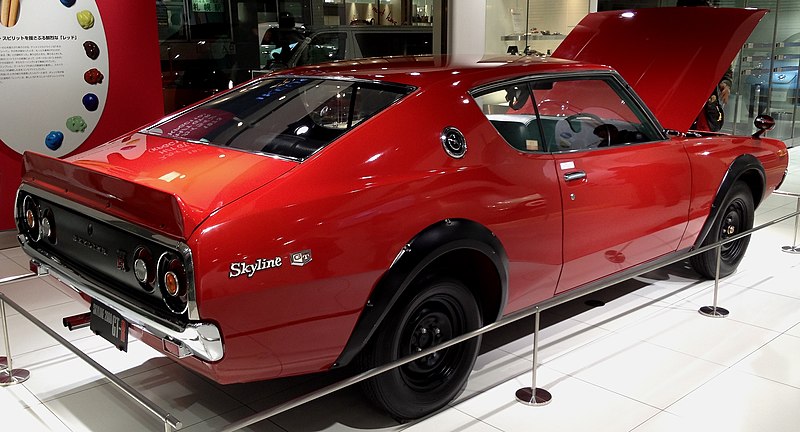
The KPGC10's successor, the KPGC110, was released in 1973 after its introduction at the 1972 Tokyo motor show. Powered by a 1989 cc I6 S20 engine, the second generation GT-R delivered power to the rear wheels through a 5-speed manual gearbox. This car also had both front and rear disk brakes. The suspension was a semi-trailing ring arm setup and minor aerodynamic parts were added.


This edition of the GT-R was also known as the "Kenmeri" Skyline, due to a popular advertisement featuring a young couple (Ken and Mary) enjoying the Hokkaido countryside. The advertisement later spawned a hit song by Buzz, and the tree featured in the advertisement later became a minor star itself.


Unfortunately, the second generation GT-R was unsuccessful, for a gasoline crisis hit in the early 1970s, drying out any demand for high-performance sports cars. A total of 197 cars were built by the end of its short production run. For the next decade, this was the last GT-R until the production of the R32 in 1989.

Nissan Skyline GT-R 1st Gen


Nissan Skyline GT-R


First generation (1969–1972)

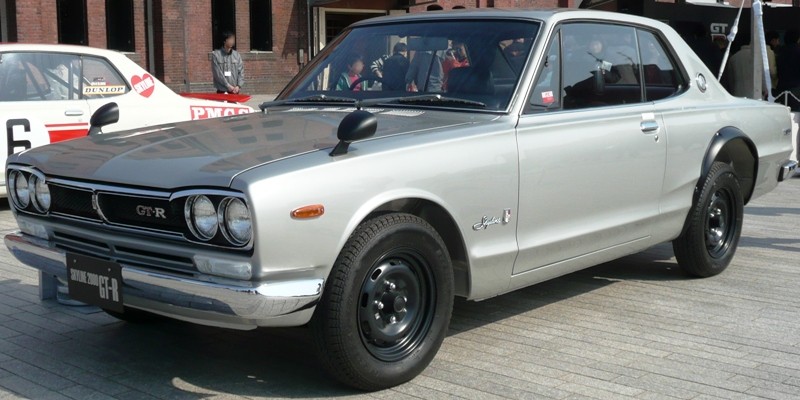
The first Skyline GT-R, known by the internal Nissan designation PGC10, was released on 4 February 1969, and was exclusive to Japanese Nissan dealership network called Nissan Prince Store when the Prince company was integrated into Nissan operations in 1966. It was available originally as a four-door sedan after a public debut at the October 1968 Tokyo Motor Show. It was advertised alongside the Nissan R380 racecar to showcase the Skyline's racing heraldry. It was equipped with the 2.0 L DOHC S20 I6 producing 160 hp (120 kW) at 7000 rpm and 177 N·m (131 ft·lbf) of torque at 5600 rpm. Power was delivered to the rear wheels by a 5-speed manual transmission. The first Skyline GT-R rode on a semi-trailing arm strut suspension. It was available as a coupe in March 1971 with the chassis code KPGC10.


A popular name for the PGC and KPGC10 Skyline GT-R was "Hakosuka," which combines the Japanese word for box ("hako" or ハコ) and the pronounced abbreviation of skyline ("Suka" or スカ as in スカイライン or "sukairain").

A total of 1,945 PGC and KPGC10 Skyline GT-Rs were produced.

Nissan Skyline GT-R

Nissan Skyline GT-R

The Nissan Skyline GT-R is a Japanese Grand tourer based on the Nissan Skyline range.

The first GT-Rs were produced from 1969 to 1973. After a 16-year hiatus since the KPGC110 in 1972, the GT-R name was revived in 1989 with the Skyline R32 due to its popularity. This car was nicknamed "Godzilla" by the Australian motoring publication Wheels in its July 1989 edition. The GT-R proceeded to win the JTCC Group A series championship 4 years in a row, and also had success in the Australian Touring Car Championship winning from 1990 to 1992, until a regulation change excluded the GT-R in 1993.

The Skyline GT-R became the flagship of Nissan performance, showcasing many advanced technologies including the ATTESA E-TS 4WDsystem and the Super-HICAS four-wheel steering. The GT-Rs remained inexpensive compared to its European rivals, with a list-price of¥4,500,000 (US$31,000). Today, the car is popular for import drag racing, circuit track, time attack and events hosted by tuning magazines. Production of the Skyline GT-R ended in August 2002. The car was replaced by the Nissan GT-R, an independent vehicle not sold as a Skyline.

The Skyline GT-R was never manufactured outside Japan, and the sole export markets were Hong Kong, Australia and New Zealand, in 1991, and the UK (in 1997, thanks to the Single Vehicle Approval scheme) as used Japanese imports. Despite this, the car has become an iconic sports car, including in countries from the Western World (mainly the United Kingdom, Australia, New Zealand, South Africa, Ireland, Canada, and the United States). It has become notable through pop culture such as The Fast and the Furious series, Initial D,Shakotan Boogie, Wangan Midnight, Need For Speed series ,and Gran Turismo series.

The car was named at the time by BBC's Top Gear as the only true Japanese contribution in the line of supercars, and by Jeremy Clarksonas one of the best cars in the world.


The Skyline name originated from Prince automobile company, which developed and sold the Skyline line of sedans before merging with Nissan-Datsun. The GT-R abbreviation stands for Gran Turismo Racer while the GT-B stands for Gran Turismo Berlinetta. The Japanese chose to use Italian when naming the car – as most cars that were made in Japan at that time used Western abbreviations – to further enhance sales. The earliest predecessor of the GT-R, the S54 2000 GT-B, came second in its first race in 1964 to the purpose-built Porsche 904 GTS. The next development of the GT-R, the four-door PGC10 2000 GT-R, scored 33 victories in the one and a half years it raced, and by the time it attempted its 50th consecutive win, its run was ended by a Mazda Savanna RX-3. The car took 1000 victories by the time it was discontinued in 1972. The last of the original GT-Rs, the KPGC110 2000GT-R, used an unchanged S20 119 kW (160 hp) inline-6 engine from the earlier 2000 GT-R and only sold 197 units due to the worldwide energy crisis. This model was the only GT-R to never participate in a major race despite the sole purpose-built race car, which now resides in Nissan's storage unit for historical cars in Zama.

The Skyline continued into the 1990s when it became popular largely because it remained rear wheel drive, while most other manufacturers were focusing on front wheel drive cars.

Throughout its lifetime, various special editions containing additional performance-enhancing modifications, were released by Nissan and its performance division Nismo (Nissan Motorsport).


Nissan Skyline 6

V35/CPV35

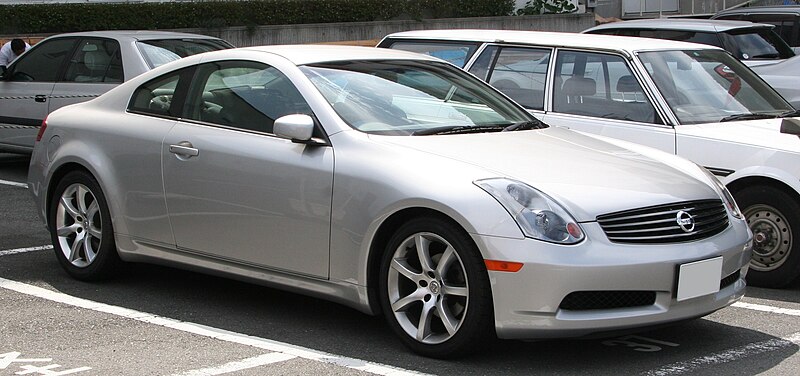
The 11th-generation (V35) Nissan Skyline, introduced in June 2001, was based on Nissan's FM platform, shared with the Nissan 350Z. The Nissan Skyline used a front-midship engine (VQ35DE and others as below), rear-wheel-drive layout (four-wheel drive was available for the sedan) to achieve a 52%/48% weight distribution. The V35 was the first Skyline made for export to the United States. There it was sold under the company's luxury brand, Infiniti as the Infiniti G35.


The all-new Skyline was introduced at reorganized Nissan Japanese dealerships called Nissan Red Stage in conjunction with the reintroduced Nissan Fairlady Z, sold exclusively at Nissan Blue StageJapanese dealerships. The vehicle went on sale on June 18, 2001. Early models included the 250GT, 250GTe, and 300GT. Early Skyline Driving Helper model includes 250GT. The Skyline 250GT FOUR sedan includes ATTESSA E-TS all wheel drive with 50:50 synchro mode, VQ25DD (NEO Di) engine, and a five-speed automatic transmission. It went on sale on September 26, 2001.[44] The Skyline 250GTm sedan went on sale on January 13, 2002, while the Skyline 350GT-8 sedan went on sale on February 19, 2002.

Beginning in 2002, the Skyline sedan was also sold in North America, where it was marketed as the Infiniti G35.

The V35 broke with previous Skyline tradition. There was no straight-six engine, no turbo, and no GT-R, a decision which extended to all later Skylines. The intention had been for the model to use a different name, a decision reversed by Renault/Nissan CEO Carlos Ghosn. who choose to gear the V35 towards the luxury-sport market. Billing the 350Z as a pure sports car, Nissan put a slightly more powerful VQ35DE in the 350Z, and while the Skyline and the 350Z shared the same platform, the350Z had additional bracing, under-body aero parts, and weighed 100 kg less. Some fans refer to V35 as the "New Generation Skyline" due to drastic changes between the V35 series and its R34 predecessor. Nonetheless, as of 1 July 2001 (two weeks after launch), total domestic Japanese Skyline orders had reached 4200 units.

Japanese tuners mostly ignored the V35 Skyline, the 2006 Tsukuba Super Lap Battle had not a single V35 entrant. Tuners such as Mines, Amuse, Hosaka, Garage Defend, M Speed, Nagisa, MCR, HKS, & Top Secret continued developing R32-R34 GT-Rs as time attack cars. Top Secret did tune a V35, but replaced the VQ35DE with a VK45DE V8 Twin Turbo. Signal USA entered a V35 in Formula D, replacing theVQ35DE with an SR20DET.

Models:
250GT – 2.5 L VQ25DD V6, 215 PS (158 kW, 270 N m)
250GT Four – 2.5 L VQ25DD V6, 215 PS (158 kW, 270 Nm) 4WD
300GT – 3.0 L VQ30DD V6, 260 PS (191 kW, 324 N m)
350GT-8 – 3.5 L VQ35DE V6, 272 PS (200 kW, 353 N m)
350GT Coupe – 3.5 L VQ35DE V6, 280 PS (206 kW, 363 N m)
XVL concept (1999)

It is a concept car demonstrating the F L-class platform. It includes a 3.0L V6 direct-injection gasoline engine, CVT transmission, sedan body. The vehicle was unveiled in 1999 Tokyo Auto Show.
Changes

For 2003 the design of the radiator grille, headlamp inner panels, and sills were altered. The interior and mirrors were altered, while the suspension and braking systems were also refined. The Skyline Coupe was introduced as a version of Infiniti G35 Sport Coupe for Japanese market. Also, the Skyline 350GT went on sale. It is a version of the Infiniti G35 sport sedan with a six-speed manual transmission for the Japanese market, only available with the 3.5 litre engine. The Skyline 350GT and Skyline 350GT Premium sedan went on sale on 2003-06-03.

For 2004 both coupe and sedans were altered, with updated interiors and improved transmissions. The five-speed automatic transmission on the 350GT Premium now included synchro rev control, while the 6-speed manual transmission was made to vibrate less. For the sedan, the front grill/bumper, foot panel, head lamp, rear bumper, and rear combination lamps were changed. The front seats received active head rest, while the rear middle seat now have a three-point seat belt as standard. There were also some new wheels and a 19-inch option for the coupé. The Skyline's 2005 update again included changes to the head and rear lamps, front bumper, and side sill protectors. Also, 19-inch aluminium alloy wheel became standard for automatic transmission cars. A "plasma cluster ion" full air conditioner with left/right independent temperature settings, heated door mirrors, head lamp auto levelizer (compliant with new legislation) was made standard equipment.

Tuesday, 3 May 2016

Nissan Skyline 5


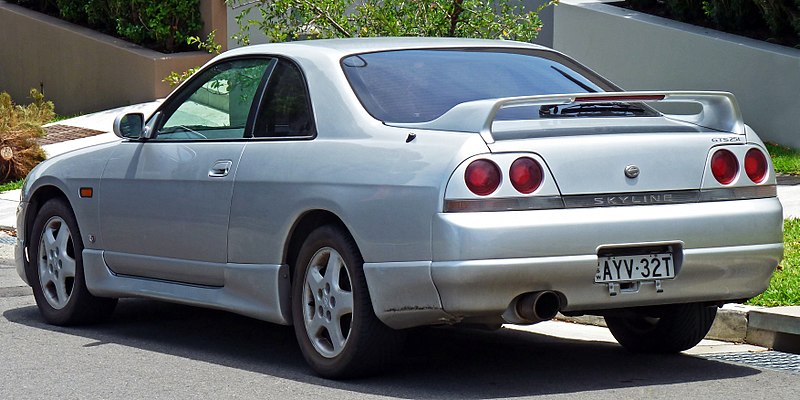
R34


In May 1998, the EN34, HR34, ER34 and BNR34 marked the introduction of the more fuel-efficient and environmentally friendly RB25DET NEO engine. The RB20E engine was discontinued in the R34 base model (GT), and the RB20DE, after last being used in the R32 Skyline, was reintroduced in updated NEO guise. The R34 GT powered by the RB20DE NEO, coupled with a five-speed gearbox, became the most fuel-efficient straight-six Skyline to date (of any shape). " The 4-speed automatic transmission available on some models in the previous two shapes were discontinued. In its place, Nissan produced a 4-speed Tiptronic transmission for all of the automatic versions (Except the base 2.0L, which has a standard 5-speed gearbox). Only the GT-T coupe variant was sold in New Zealand and Hong Kong from 1997 to 2000 respectively. They were the only two countries besides Japan that sold the R34 GT-T model Skylines new. All Japanese Nissan Prince Storelocations that sold the Skyline were renamed Nissan Red Stage.


GT – 2.0 L RB20DE NEO I6, 155 ps (114 kW)
25 GT, GT-X (4 door model), 2.5 L RB25DE NEO I6, 200 ps (147 kW)
GT-V 2.5 L RB25DE NEO I6, (147 kW)
GT-FOUR – 2.5 L RB25DE NEO I6, 200 ps (147 kW) 4WD
GT-T – 2.5 L RB25DET NEO turbo I6, 280 hp (206 kW, 343 N m)
GT-R


The GT-R reappeared in 1999, with a revised chassis and other updates. The R34 turbos received a ball bearing core. The R34 N1 turbos had a metal exhaust wheel, and ball bearing center section. The turbo outlet pipes were changed from cast to formed metal outlets. The intercooler outlet side and rear turbo dump pipe had temperature probes fitted in the V-spec models. The biggest feature and most significant feature to the R34 GT-R that wasn't seen on any other model skyline was the display unit at the top of the dashboard. This display unit was very significant for the car at its time. This display showed many of the cars engine stats including boost pressure, oil temp, water temp and more. As a 1999 car this kind of technology was very rare and advanced at the time. The display was capable of showing the G-force that the car was under when driving and there was also a lap timer that could be started by a button that was located near the gear lever. There was a computer jack lead hidden underneath the left passenger side skirt that could be used to transfer driving data from the car to a laptop. This could only be done with a Japanese version of Windows and Japanese software, which today is very hard to come by. Other features such as the battery being located under the back seat of the car made more room available in the engine bay. The Nissan Skyline GT-R rivals are the Toyota Supra and the Mazda RX-7

Models: (all ATTESA E-TS Pro AWD)
GT-R – 2.6 L RB26DETT twin-turbo I6, 332 PS (244 kW, 392 Nm) (advertised as 276)[38]
GT-R V·spec – Additional aero parts, brake ventilation ducts, diffuser, -ALSD.
GT-R V·spec II – As V·spec + carbon fibre hood with NACA duct.
GT-R V·spec II N1 – V·spec II with Blueprinted N1 motor, no A/C, no stereo, no rear wiper, basic interior trim. (only 45 made)
GT-R M·spec – Leather interior, softer suspension with "Ripple Control" dampers, heated seats.
GT-R V·spec II Nür – As above V·spec II + N1 motor, 300 km/h speedometer. (only 750 made)
GT-R M·spec Nür – As above M·spec + N1 motor, 300 km/h speedometer. (only 253 made)
GT-R NISMO S-tune- The S-tune was an M·spec but with further modifications to components in the engine block.
GT-R NISMO R-tune- Same as the S-tune, the R-tune was a different style M·spec
GT-R NISMO Z-tune – 2.8 L (bored and stroked) RB26DETT Z2 twin-turbo I6, 500 PS (368 kW, 540 Nm) Z1 and Z2 (Only 19 made)
Skyline GT-R M·spec (2001–02)

The M·spec is a version of Nissan Skyline GT-R with ripple control shock absorbers, M·spec-specific leather seat (front/rear seat, with front seat heater), 3-spoke leather wrapped steering wheel, and choice of four body colours (including Silica Breath (RPM/multi flex colour)).

The vehicle went on sale on May 8, 2001.
Skyline GT-R M·spec Nür, V·spec II Nür (2002)

The M·spec Nür and V·spec II Nür are limited (1000 units) versions of Nissan Skyline GT-R with Super Taikyu N1 spec engine, for Japanese market. It included 300 km/h speedometer, 3d grade name emblem, and addition body colour option (millennium jade (metallic)).

The vehicles went on sale on February 26, 2002.
Production

The production of Skyline GT-R type R34 ended in August 2002.

Since the beginning of Skyline GT-R M·spec Nur and V·spec II Nür sales, 25% of vehicles sold were M・spec Nur, 75 of vehicles sold were V·spec II Nür. Millennium Jade, White Pearl, and White body colors have been used on 28%, 22%, 16% of M·spec Nür and V·spec II Nür vehicles respectively.
Marketing

As part of the Type R34 GT-R final campaign, all Skyline GT-R customers received a GT-R official photo album before January 24, 2002.

CONTINUE IN THE NEXT POST.....

Nissan Skyline 4


R33


The R33 Skyline was introduced in August 1993. Slightly heavier than the R32, it is available in coupe and sedan bodystyles. All models now used a 6-cylinder engine. Nissan took the unusual step of down-grading the GTS model to have only the RB20E, while the twin-cam of the R32 GTS was discontinued along with the 2.0 L turbo RB20DET.

Some models came equipped with a new version of the HICAS 4-wheel steering system called Super HICAS. This computer controlled system was first used on the R32 GT-R. Super HICAS used electric actuators to steer the rear, as opposed to the hydraulic HICAS. This generation was no longer considered a "compact" under Japanese legislation that determined the amount of tax liability based on exterior dimensions.


As an option, an active limited slip differential was available instead of the standard viscous LSD. This new unit locked the rear differential if it detected that traction was lost by one of the wheels. A light on the dash also lit up if the LSD engaged. Active LSD came standard on all V-Spec R33 GT-R Skylines and was also available on some ECR33 GTS-25t models; these can be identified by the A-LSD and SLIP lights on the tachometer.

The RB25DE and RB25DET engines also became equipped with NVCS (variable inlet cam phasing). NVCS equipped RB's have a bulge on the front of the cam cover. To celebrate their 40th anniversary, Nissan introduced a very rare 4-door GT-R. Two versions of the 4-door GT-R were available from Nissan's subsidiaries: the first was produced by Autech, and the second was a joint Autech/Nismo project.

A Nissan Laurel C34 based wagon was released in September 1996, called the Stagea. It is widely regarded as a compatriot of the Skyline, rather than the Laurel it was based on, owing to drivetrain configurations—Commonly AWD using ATTESA ET-S. A common modification on the Stagea is to fit it with an R34 skyline front, in effect making an R34-lookalike wagon. A manual transmission was only available on the RS-Four and RS-Four V models. There was also an Autech tuned Stagea, the 260RS; released with full GT-R running gear, including an RB26DETT engine and manual transmission, a unique body kit, 17" BBS style alloys, and GT-R instrumentation.

Models:
HR33 GTS – 2.0 L RB20E SOHC I6, 130 PS (96 kW, 172 N m)
ER33 GTS-25 – 2.5 L RB25DE DOHC I6, 190 PS (140 kW, 231 N m)
ENR33 GTS-4 – 2.5 L RB25DE DOHC I6, 190 PS (140 kW, 231 N m) 4WD
ECR33 GTS-25t (GTS-t) – 2.5 L RB25DET DOHC turbo I6, 250 PS (184 kW, 294 N m)
ECR33 P.Ride 280 Type MR – 2.8L RB28DET DOHC turbo I6, 300 PS


The R33 Skyline (Series 2) continued the concepts introduced in the R32. Driver and Passenger airbags became standard in 1996. As a result, pre-1996 models are barred from being imported into various countries for consumer road use as they do not meet the frontal impact standards. (However, in the U.S., there are Federal Laws regarding safety and emissions that require certain documents to be obtained, certain criteria to be met and adhered to, or 25 years to pass, before the sale of this vehicle becomes legal.) For the RB25DET engine the ignition system was also changed, with the ignition module no longer located on the cam covers and was instead replaced by smart ignition coils (Ignitor built into coil) and ECU. The RB25DET (turbo) was also given a Ceramic compressor wheel. Throughout the time the R33 was produced there were quite a number of different styled lights and bodykits fitted, the actual body/chassis underwent no changes. Among the cosmetic changes in the series 2 were, the headlights which tapered down more towards the grill and were fitted with improved reflectors, the grill (which was longer on the Series 1), the bonnet which had a re-shaped leading edge to fit the new lights and front bumper changing shape in the smallest amount to match the lower edge of the new headlights. Later models of the Series 2 also had the option of having an Active-LSD fitted. The R33 ceased production in February 1998 with the 40th Anniversary R33.

GT-R


The BCNR33 GT-R version also had the same RB26DETT engine that the BNR32 was equipped with, although torque had been improved, due to changes in the turbo compressor aerodynamics, turbo dump pipe, and intercooler. The turbo core changed from a sleeve bearing to a ball bearing, but the turbine itself remained ceramic, except on N1 turbos (steel turbine, sleeve bearing). From the R33 onward, all GT-Rs received Brembo brakes.[35] In 1995 the GT-R received an improved version of the RB26DETT, the ATTESA-ETS four-wheel-drive system, and Super HICAS 4-wheel steering.

A limited edition model was created in 1996, called the NISMO 400R, that produced 400 hp (298 kW) from a road-tuned version of Nissan's Le Mans engine. A stronger six-speed Getrag gearbox was used.

An R33 GT-R driven by Dirk Schoysman lapped the Nordschleife in less than 8 minutes. Though it was often said to be the first production car to break 8 minutes, the limited run Jaguar XJ220 had already achieved a 7'46" lap. Other manufacturers had caught up since the R32 was released, and the R33 never dominated motorsport to the extent of the R32.

Models:
GT-R – 2.6 L RB26DETT DOHC twin-turbo I6, 305 PS (224 kW, 375 N m) (advertised as 280 PS) 4WD
GT-R LM – 2.6 L RB26DETT DOHC twin-turbo I6, 305 PS (224 kW) FR
NISMO 400R – 2.8 L RBX-GT2 DOHC twin-turbo I6, 400 PS (294 kW, 478 N m) 4WD
4Dr.GT-R Autech Version – 2.6 L RB26DETT DOHC twin-turbo I6, 305 PS (224 kW, 375 N m) (advertised as 280 PS) 4WD - only 447 made


Nissan Skyline 3


R32


The R32 Skyline debuted in May 1989. It was available as either a 2-door coupe or 4-door hardtop sedan, all other bodystyles were dropped. The R32 featured several versions of the RB-series straight-6 engines, which had improved heads (the twelve port inlet was gone) and used the ECCS (Electronically Concentrated Control System) injection system. Also available was an 1,800 cc 4-cylinder GXi model. Most models had HICAS four-wheel steering, with the rear wheels being hydraulically linked to the front steering. The 2.5-litre GTS-25 became one of the first Japanese production cars to feature a 5-speed automatic transmission. The GTS-t came in standard and Type M configurations, with the Type M having larger five-stud 16-inch wheels, four piston front callipers and twin piston rears plus other minor differences. ABS was optional (except for the GT-R and GTS-4), mechanical LSD was standard on the GTR and viscous LSD was standard on all turbo models and optional on all but the GXi. Nissan also produced 100 Australian models of the R32. In addition, there was a 4WD version of the GTS-t Type M, called the GTS-4.

The station wagon bodystyle was discontinued, and replaced by the smaller, front-wheel drive Nissan Avenir (Primera).

Models:
GXi Coupe and Sedan – 1.8 L CA18i I4, 91 PS (67 kW; 90 hp)
GTE Coupe and Sedan – 2.0 L RB20E I6, 125 PS (92 kW; 123 hp), 152 N m
GTS Type-X, S, J – 2.0 L RB20DE I6 155 PS (114 kW; 153 hp), 154 N m
GTS-25 Type-X, S, XG – 2.5 L RB25DE I6, 180 PS (132 kW; 178 hp), 231 N m
GTS-t, Type-M – 2.0 L RB20DET turbo I6, 215 PS (158 kW; 212 hp), 265 N m
GTS-4 – 2.0 L RB20DET turbo I6, 215 PS (158 kW; 212 hp), 265 N m 4WD
Autech GTS-4 – 2.6 L RB26DE I6, 220 PS (162 kW; 217 hp), Autech Version (auto only) 4WD - only 188 made[25]
GT-R – 2.6 L RB26DETT twin-turbo I6, 280 PS (206 kW; 276 hp), 368 N m 4WD; also NISMO, N1, V-Spec, and V-Spec II variants.
NISMO S-Tune


GT-R


The R32 GT-R was first produced in 1988 including prototype cars. The first six Nismo's were built in 1989. The other 554 NISMO GT-R's were all built in 1990 and were all Gunmetal Grey in color. TheRB26DETT engine actually produced ~320 PS, but it was unstated due to the Japanese car makers' "gentlemen's agreement" not to exceed 280 PS (276 hp). The engine was designed for ~500 hp in racing trim, and then muzzled by the exhaust, boost restriction, and ECU. The electronic boost control had a small physical restriction in the control lines. It was marked in yellow so the new owner could remove it and enjoy a safe factory boost increase. After this increase the car would put out ~310 hp (~230 kW) and could do 0–100 km/h in 4.7 seconds and quarter mile in 12.8 seconds.

The GT-R had a significantly larger intercooler, larger brakes, and aluminium front guards and bonnet. Other distinguishing features include flared front and rear wheel arches. More supportive seats were fitted, and the turbo boost gauge and digital clock were removed from inside the instrument cluster. The clock was replaced with a torque meter that indicated how much torque was being delivered to the front wheels (0%–50%). Oil temp, voltage, and turbo boost gauges were fitted just above the climate control.

The Porsche 959 was Nissan's target when designing the GT-R. The chief engineer, Naganori Ito, intended to use the car for Group A racing, so the design specification was drawn up in conjunction with a copy of the Group A rules. The Nordschleife production car record at the time of development was 8'45" – set by a Porsche 944. Nissan test driver Hiroyoshi Katoh reset the record with a time of 8'20". Best Motoring managed 8'22"38.

The R32 GT-R dominated Japanese Touring Car Championship (JTCC), winning 29 races from 29 starts, taking the series title every year from 1989 to 1993.[30] It took 50 races from 50 starts from 1991 to 1997 (latterly R33) in the N1 Super Taikyu.

The R32 GT-R was introduced into the Australian Touring Car Championship in 1990 and promptly ended the reign of the previously all-conqueringFord Sierra Cosworth, winning Bathurst 1000 classic in 1991 and 1992. This success led to the Australian motoring press nicknaming the car Godzilla due to it being a "monster from Japan". As Australia was the first export market for the car the name quickly spread. Such was GT-R's dominance that it was a significant factor in the demise of Group A Touring Car racing, the formula being scrapped soon after. JTCC was similarly blighted by the R32 GT-R, and splintered soon after, leading to the switch to the Supertouring category and also indirectly to theGT500 category of today.

When originally designed, the homologation rulebook mandated 16-inch wheels, so that's what the GT-R got. This limited the size of the brakes, and the Nissan four pots weren't really up to competition use. A later change in rules allowed 17-inch wheels, so in February 1993 the GT-R V-spec (for Victory) emerged wearing 17" BBS mesh wheels(225/50/17) covering largerBrembo brakes. The clutch actuation changed from a push to a pull system, the car had the standard rear differential, the electronic rear differential did not show up until the R33 Vspec. A year later the V-Spec II appeared with a new sticker and wider tires (245/45 17).


The Nismo Skyline GT-R is a limited (500 street, 60 racing) version of Nissan Skyline with Nissan RB engine with twin ceramic turbochargers rated 280 PS (206 kW; 276 hp) at 6,800 rpm and 353 N·m (260 lb·ft) at 4,400 rpm, all-wheel steering, electronically controlled four-wheel drive.

As of August 2014, the R32 Skyline GT-R is eligible for US import under the NHTSA "25 year" rule, that allows vehicles that are 25 years old (to the month) or older to be imported. These vehicles, due to their age do not have to comply with federal emissions or with Federal motor vehicle safety standards. Montu Motors landed the first US federally legal R32 Skyline GT-R, through Canada, at 12:01am August 1, 2014.


CONTINUE IN THE NEXT POST.....